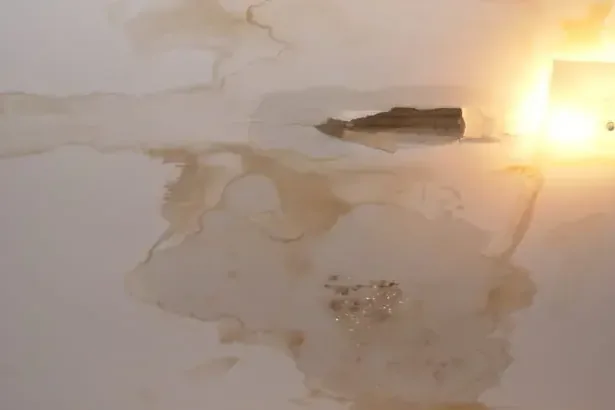
An air conditioner pulls water out of the indoor air, and in a humid Florida summer that can be gallons a day. The water runs from the coil into a pan and out through a condensate drain. When algae clogs the drain or the pan rusts through, the water goes into the ceiling, the closet floor or the wall below the unit instead.
Why attic units cause ceiling damage
An air handler in the attic sits right above the ceiling drywall. A secondary pan and a float switch are meant to catch overflow, but a cracked pan or a switch that never trips lets water soak the insulation and spread across the drywall until a brown ring appears below.
Brown ring spreading under the air handler? The drying team runs 24/7.
Check the attic insulation and ceilingSigns the condensate drain is backing up
- Water in the secondary pan under the unit
- A brown ring on the ceiling near the vent
- The AC shutting off on its float switch
- Damp carpet or baseboard by a closet unit
- Musty air when the system starts
What drying an AC leak involves
The drying team checks the attic insulation and pulls what is soaked, opens stained drywall only where readings stay high, and dries the joist bays with air movers and dehumidifiers. An HVAC technician clears the drain and fixes the pan; the claim file records both.
Because the water came from a cold coil, it is usually clean at first, but water that sat in a dirty pan is treated as gray water.
AC Condensate and Air Handler Leaks in short
Water damage cleanup after an air handler, condensate drain or drain pan overflows in an attic, closet or garage: ceiling and insulation drying, wall drying and documentation to the IICRC S500 standard.