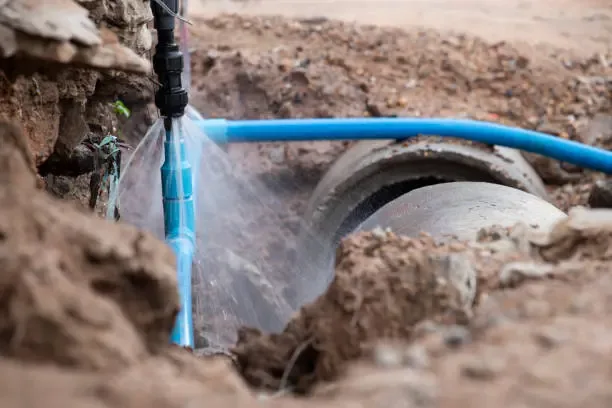
A burst pipe pushes clean water at full pressure until someone shuts the valve, and in a block home that water runs down the inside of the wall, under the baseboard and across the slab. By the time a stain shows on the drywall, the bottom plate and the insulation behind it are usually wet too.
Where pipes split in local homes
Fittings behind washers and sinks, supply pipes in exterior walls, and pipes in the attic above a ceiling are the usual spots. Water hammer, an old fitting, or a nail through a pipe during a remodel can all start it. The break is rarely the only wet spot, so the walkthrough follows the water, not the noise.
Pipe spraying inside a wall? The response team dispatches 24/7.
Report the split pipe and the wet wallsDrying a wall without gutting it
When the water was clean and the crew arrives early, the drying team often dries the cavity in place. Baseboards come off, small holes are drilled at the base of the wall, and air is pushed into the cavity while dehumidifiers pull moisture out of the room.
When drywall has to come out
- It sags, crumbles or has lost its paper face
- It stayed wet long enough to grow mold, often 24 to 48 hours
- The water picked up contamination on the way down
- Insulation behind it is soaked and holding water
Every opening is logged with photos and readings so the claim file shows why it was made.
Burst Pipe Water Damage in short
Cleanup and structural drying after a supply pipe splits inside a wall, ceiling or cabinet: extraction, moisture mapping, controlled access holes and drying to the IICRC S500 standard.