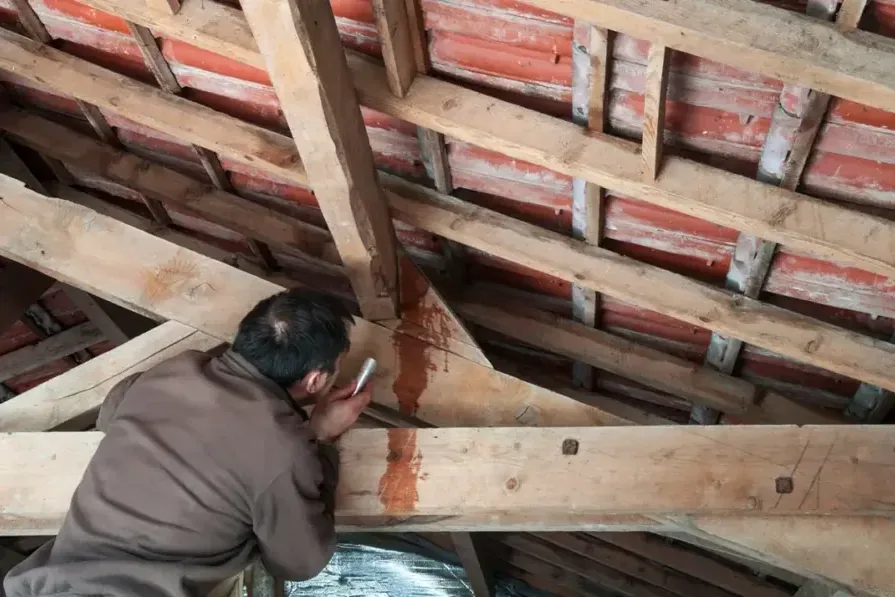
Summer thunderstorms here drop heavy rain in a short time, often with wind behind it. Water finds the weak spots: worn flashing around a chimney or wall, cracked vent boots, lifted shingles and roof valleys. It soaks the decking and insulation first, so the ceiling stain is the last sign, not the first.
Roof leak or something else?
A stain that grows only during rain points to the roof. A stain that grows in dry weather points to plumbing or an attic air handler. The mitigation team checks the attic with a thermal camera and meters, because the drying plan and the claim depend on the source.
Afternoon storm left water dripping through the ceiling? Crews dispatch 24/7.
Get the attic checked after the stormWhat gets dried and what gets pulled
- Soaked attic insulation is removed and bagged
- Roof decking is dried from below where reachable
- Ceiling drywall is dried in place if it is still firm
- Wall cavities below the leak are checked and dried
- Flooring under a drip is checked for trapped water
Working around the roof repair
A roofer fixes or tarps the roof. Drying can start before the permanent repair, as long as the opening is covered, because wet insulation and drywall do not wait. The crew photographs the attic before anything is removed so the roofer and the adjuster see the same thing.
After a big storm
When a named storm causes the damage, the claim may be handled differently; see hurricane and tropical storm water damage for that process.
A roof leak that drips for weeks into insulation is a different claim from a sudden storm opening, so dates and photos matter.
Roof Leak Water Damage in short
Interior water damage cleanup after rain gets past shingles, flashing, vents or a damaged roof: wet insulation removal, ceiling and wall drying and documentation to the IICRC S500 standard.