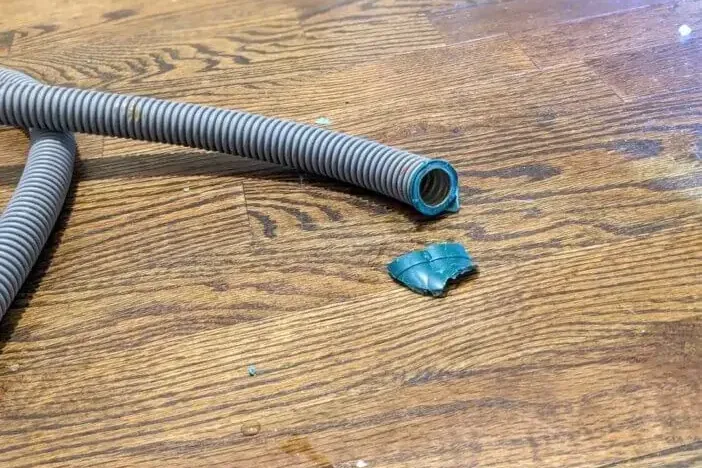
Appliance leaks are pressure leaks. A rubber washer hose, a plastic ice maker tube or a toilet supply can split and run at full house pressure until someone notices, often overnight or while the family is away. Clean supply water is Category 1, but a washer drain or dishwasher discharge carries soap and food waste and counts as Category 2.
Where appliance water goes
Kitchen leaks run under the dishwasher and the cabinet toe kicks, where the water sits on the slab behind the base cabinets. Laundry leaks spread under the washer, across the floor and under the wall into the next room. An upstairs laundry sends it down through the ceiling.
Washer or dishwasher water spreading under the cabinets? Crews dispatch 24/7.
Report the split hose and soaked cabinetsDrying under cabinets
The drying team pulls the toe kicks, checks the cabinet bottoms and the wall behind them, and pushes air into the space under the base cabinets. Particleboard that has swollen does not recover, but plywood cabinet floors and the drywall behind them usually dry in place when caught early.
Hoses and supplies worth checking
- Rubber washer fill hoses older than five years
- Plastic ice maker tubing behind the fridge
- Toilet supply connectors with plastic nuts
- Dishwasher supply and drain connections
- Sink supply valves that have never been turned
Keeping the claim simple
The restoration team photographs the failed part before it is thrown away and logs readings under the cabinets each day. That record shows the adjuster the water came from a sudden failure and how far it went.
Braided stainless hoses and a leak sensor under each appliance are cheap insurance against the next one.
Appliance and Supply Hose Leaks in short
Water damage cleanup after a washing machine hose, dishwasher, refrigerator ice maker, toilet supply or sink supply fails: extraction, cabinet and floor drying to the IICRC S500 standard.