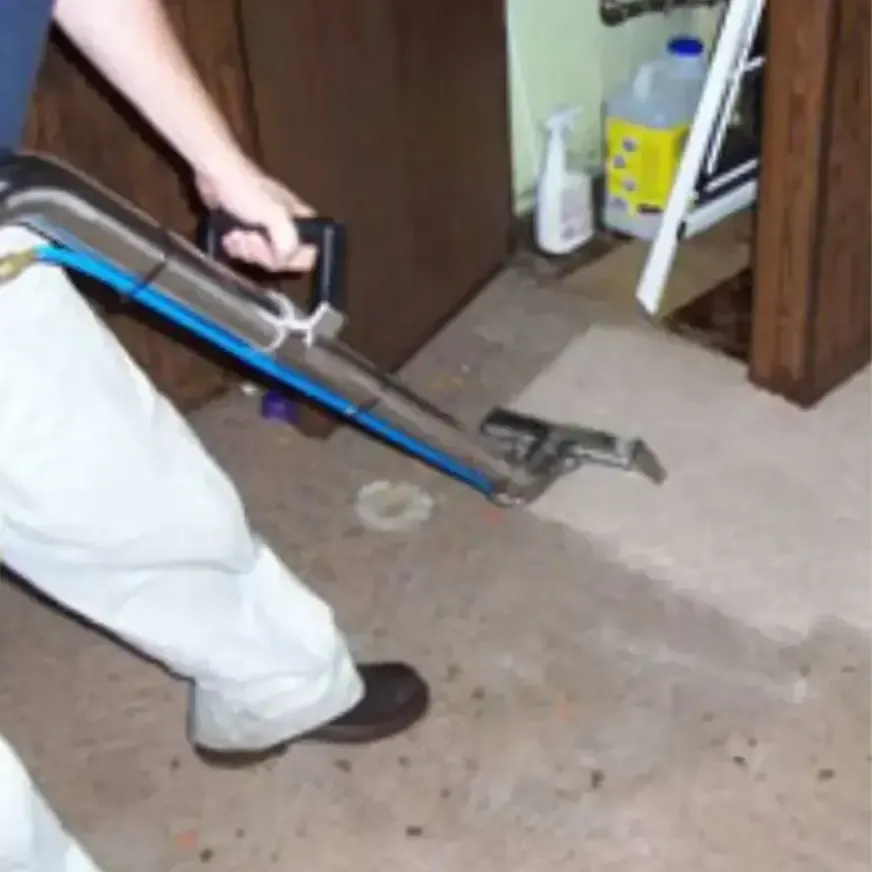
Water extraction is the first job on almost every loss. A pipe, a water heater, an overflowing air handler or storm water leaves water standing on the floor, and every hour it sits it moves into baseboards, drywall and the slab under the flooring. Extraction removes it as liquid, which is far faster than drying it out of the materials later.
Why extraction comes before any fans
Air movers only work on what is damp. A floor still holding standing water just pushes humid air around the house. The extraction crew runs truck-mounted units first, then weighted extraction tools on carpet to squeeze water out of the pad. In humid Florida air that step cuts drying days.
Standing water on tile or carpet? The extraction crew can be on the way 24/7.
Clear the standing water from the floorsWhat happens to carpet, tile and wood
Clean water caught early often lets the drying team float the carpet and dry it in place with new pad. Pad soaked by gray or black water comes out. Tile over slab sheds water well, but grout joints and the wall base still need readings. Wood floors get drying mats that pull water from between the boards.
Signs water is still hiding
- Baseboards that swell or pull away from the wall
- A musty smell a day after the floor looks dry
- Carpet that feels cool and damp near the walls
- Meter readings that stay high at the bottom of drywall
Extraction is judged by what is left behind, so the crew keeps going until the tools stop pulling water.
Water Extraction and Removal in short
Emergency removal of standing water from homes and businesses with truck-mounted and portable extraction, followed by moisture mapping and structural drying to the IICRC S500 standard.