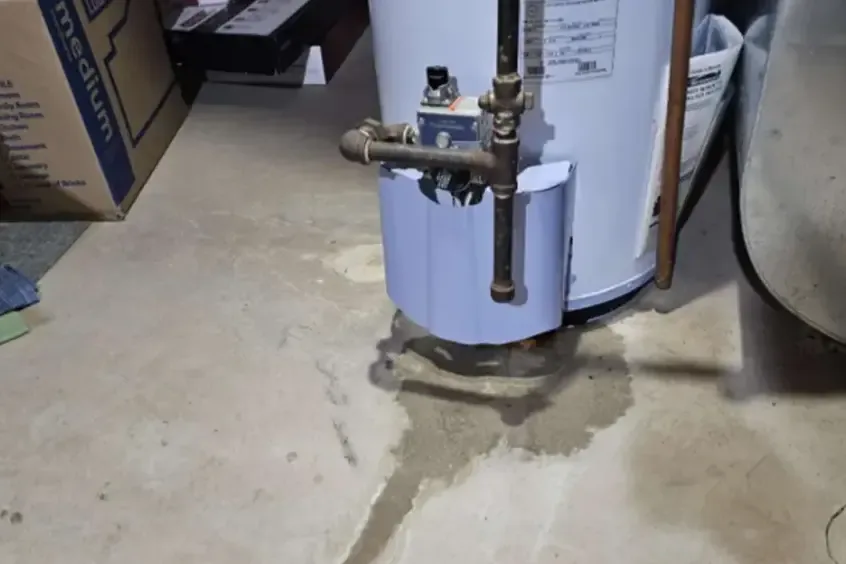
A water heater holds a full tank and keeps refilling until the cold supply is closed. A slow drip from a relief valve can soak a closet floor for weeks; a ruptured tank can put the whole load across a garage and under the door into the house almost at once.
Garage tanks and closet tanks
In a garage, water spreads across the slab and into stored boxes, then under the door into a laundry room or kitchen. In an interior closet, it soaks the drywall, the baseboards and the flooring in the rooms on each side. The drying plan follows those paths.
Tank leaking across the garage or closet floor? The extraction crew runs 24/7.
Report the failed tank and wet garageWarning signs before a tank fails
- Rust-colored water from hot taps
- Popping or rumbling as the tank heats
- Water in the drain pan or around the base
- A relief valve that drips or hisses
- Corrosion at the top fittings
After the tank is replaced
The installer handles the new heater. The drying team handles what the old one left behind: wet drywall behind the tank, swollen cabinet bases nearby and water trapped under vinyl or laminate. Equipment stays until readings say dry, not until the new tank is in.
Old water in the tank and pan can carry sediment, so the area is cleaned before drying starts.
Water Heater Leak Cleanup in short
Cleanup after a tank-type or tankless water heater leaks or ruptures in a garage, closet or utility room: extraction, moisture mapping, wall and cabinet drying to the IICRC S500 standard.