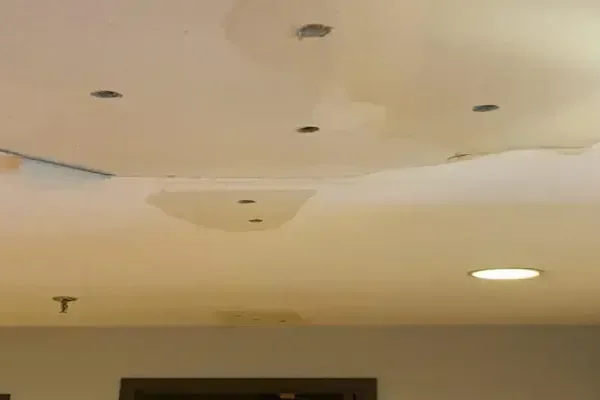
A ceiling stain is where the water finally showed up, not where it started. It can come from an upstairs tub or toilet, a supply pipe in the ceiling, an air handler in the attic, or rain getting past the roof. The source decides the water category, so the walkthrough finds it before anything is cut.
When a ceiling is dangerous
Drywall soaked from above gets heavy and can drop without warning, often with water held in a bulge. Keep people and pets out from under it. The response team relieves the water through a controlled opening, catches it, and then decides what has to come down.
Ceiling bulging or dripping? The response team runs 24/7.
Drain the bulge and dry the ceilingCeiling leak sources here
- An upstairs tub, shower or toilet seal
- A supply pipe running through the ceiling
- An attic air handler with a full or rusted pan
- Wind-driven rain past a roof vent or flashing
- A water heater in the attic
Drying the joist bays
Wet insulation in the attic is usually pulled because it holds water against the drywall. Where the drywall is still sound, the drying team dries it in place, using small openings and directed air into the joist bays while dehumidifiers work in the room below.
Repair after drying
Drywall is patched and painted only after readings show the framing and the ceiling are dry, so the stain does not return through new paint.
Each opening is photographed and logged, which keeps the claim file clear about why it was made.
Ceiling Leak Water Damage in short
Water damage cleanup for stained, wet or sagging ceilings from an upstairs bath, supply pipe, AC unit or attic leak: safe openings, insulation removal and drying to the IICRC S500 standard.