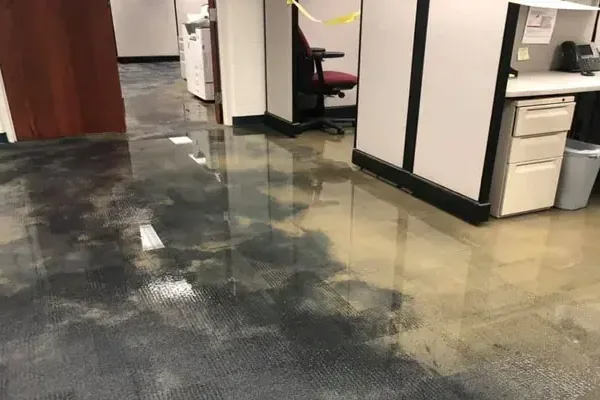
A water loss in a business is two problems at once: the building and the lost days. A failed restroom supply, an overflowing rooftop or closet AC unit, a sprinkler head or storm water can close a shop, an office or a church hall until it is dry. The mitigation team plans the drying around the hours the space needs to stay open.
Older buildings and newer ones
Older buildings around the courthouse square can have plaster walls, wood floors and shared walls, where water moves into the next tenant's space. Newer strip buildings along the main roads often have slab floors, steel studs and drop ceilings that hide wet insulation. Each gets its own drying plan.
Water in the shop, office or church hall? The mitigation team runs 24/7.
Keep the business open while it driesKeeping the doors open
- Drying done in phases, one zone at a time
- Containment walls around work areas
- Equipment placed away from customer paths
- Quiet setups for offices and churches
- A daily update for the owner or manager
Rental units and landlords
In rentals and small multifamily buildings, water often crosses from one unit into the next. The mitigation team checks the units on each side and below, documents each one separately, and keeps tenants informed about which rooms to avoid.
Records for the claim
Commercial claims often include business interruption. Moisture maps, daily logs and photos show how long each area was out of use.
An emergency plan with the shut-off locations written down saves time on the worst day.
Commercial Water Damage in short
Water damage restoration for commercial buildings, churches and rental properties: extraction, phased structural drying, containment around open areas and documentation for the insurance claim.