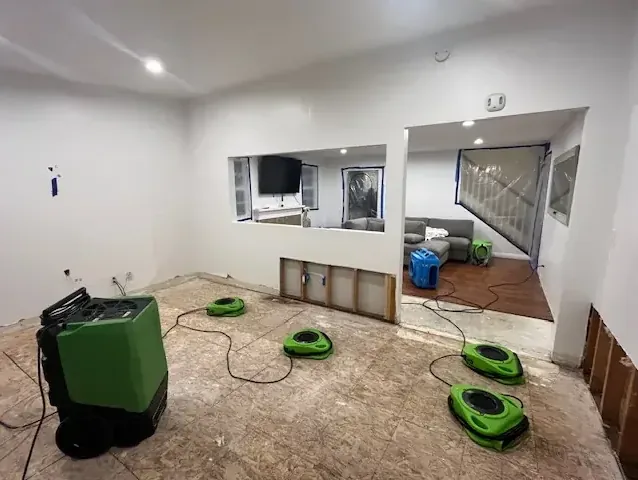
Structural drying is the part of water damage restoration that happens after the water is gone from sight. Drywall, framing, block walls and slab hold water inside them, and that water has to be pulled out on purpose. The IICRC S500 standard calls for a measured goal, not a guess.
Drying in a humid climate
Opening windows works in dry climates. Here, outdoor air is often wetter than the air inside a wet house, so the drying team keeps the house closed and lets LGR dehumidifiers pull water out of the air. Desiccant units take over for dense materials and slab, where refrigerant units slow down.
Walls and floors still reading wet after the water is gone? The drying team runs 24/7.
Get the walls and slab measuredClasses of water loss
- Class 1: a small area, little absorbed water
- Class 2: a whole room, carpet and lower walls wet
- Class 3: water from above, ceilings and walls soaked
- Class 4: dense materials such as slab, block and hardwood
How dry is dry
Before drying starts, the tech measures a dry reference: the same material in an unaffected part of the house. Equipment stays until wet materials read within 2 to 4 points of that reference. Daily psychrometric readings track temperature, humidity and grains per pound so the adjuster can see the drying working.
Why equipment is moved during the job
As some areas reach their goal, air movers are moved to the wettest spots and dehumidifiers are resized, which keeps drying days down.
Pulling equipment early to save a day often costs more later, when trapped moisture shows up under paint or flooring.
Structural Drying and Dehumidification in short
Structural drying of framing, block walls, subfloor, slab and drywall after water damage: moisture mapping, air movers and LGR or desiccant dehumidifiers, with daily logs until materials read dry.