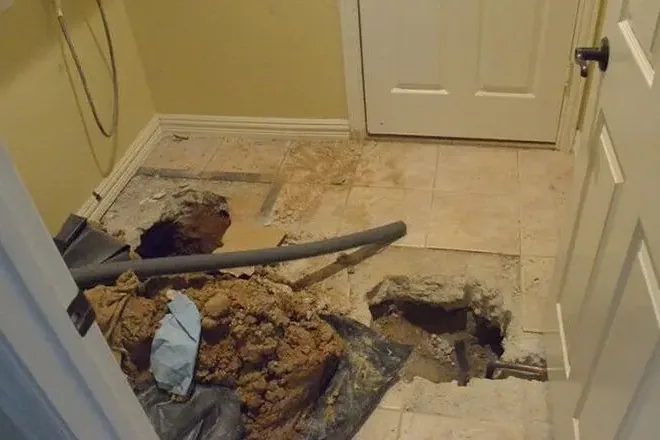
Sewage that comes up through a toilet, tub or floor drain is Category 3 the moment it appears. It carries bacteria and viruses that soak into anything porous. Homes on city sewer back up when the main from the house clogs or roots get in; homes on a septic tank back up when the tank is full or the drain field is soaked after heavy rain.
Why sewage is handled differently
Clean water can often be dried in place. Sewage cannot. The response team sets containment so the rest of the house stays clean, works in protective gear, and removes porous materials the sewage touched instead of trying to dry them.
Sewage coming up through a drain? The response team runs 24/7.
Report the septic or sewer backupWhat comes out and what stays
- Carpet and pad touched by sewage come out
- Drywall is cut above the wet edge
- Insulation behind wet drywall comes out
- Tile, sealed concrete and solid wood are cleaned and treated
- Soft contents touched by sewage are usually discarded
Septic backups after heavy rain
When rain saturates the drain field, a septic system has nowhere to send water, and the lowest drain in the house backs up first. Pumping the tank and letting the field drain is the septic contractor's job; cleanup inside the home is the restoration team's. Both appear separately in the claim file.
Treatment and drying
After removal, every affected surface is cleaned and treated with an EPA-registered antimicrobial left wet for its full dwell time. Only then does structural drying begin, with readings each day until the framing and slab are dry.
Keep children and pets away from the area, and do not run fans that spread contaminated air before the crew arrives.
Sewage and Septic Backup Cleanup in short
Cleanup after a city sewer or septic system backs up into a home: Category 3 containment, protective gear, removal of porous materials, EPA-registered antimicrobial at its dwell time and drying.