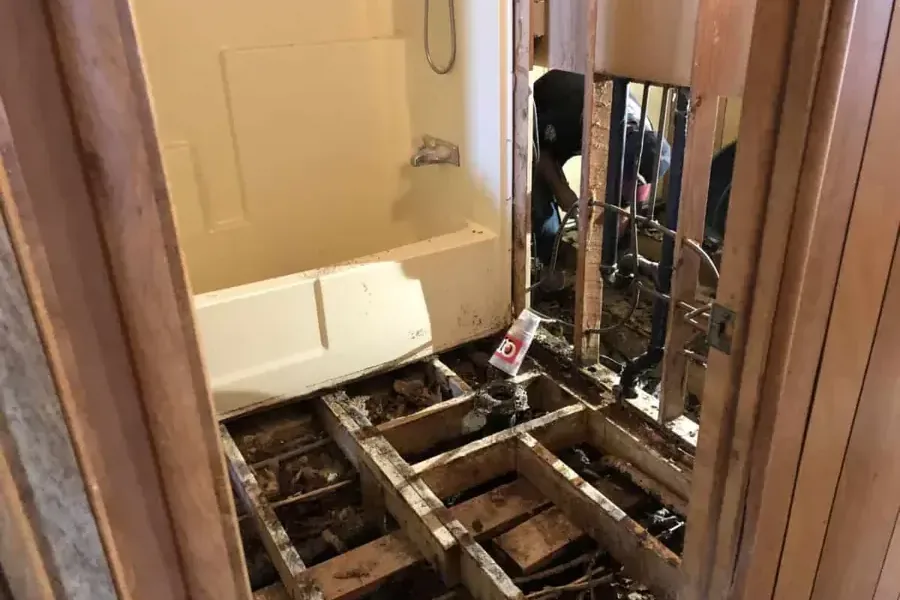
A manufactured home is built differently from a block house on slab. The floor is a wood or particleboard deck on a steel frame, with insulation and plumbing held under it by a fabric or plastic belly wrap. Water that gets below the floor has nowhere to drain, so it sits in the wrap and soaks the insulation and the floor decking from below.
Common leak points
- Supply pipe joints under the floor
- Water heater closets with no drain pan
- Toilet and tub seals over the floor deck
- Washer hoses in a small laundry closet
- Roof seams and vents on older roofs
- AC ducts and condensate drains in the belly
Belly wrap sagging or floors going soft? The drying team dispatches 24/7.
Report the soft floor and sagging wrapWhy the belly wrap matters
A sagging or bulging belly wrap is often the only sign of a leak underneath. The drying team cuts controlled openings in the wrap, drains trapped water, pulls wet insulation and dries the underside of the floor with air movers and dehumidifiers. The wrap is patched once readings say the floor is dry.
Floors and wall panels
Particleboard decking swells and loses strength when it stays wet, so wet sections are checked with meters and sometimes replaced. Thin wall panels can trap water behind them; the crew opens them only where readings stay high.
Working under the home
Skirting is removed in sections for access, and the space under the home is checked for standing water before anyone crawls in.
Flood water that reached the belly or floor is Category 3 and follows the flood cleanup protocol.
Manufactured Home Water Damage in short
Water damage cleanup for mobile and manufactured homes: leaks under the floor, in the belly wrap and behind thin wall panels found with meters, extracted and dried to the IICRC S500 standard.