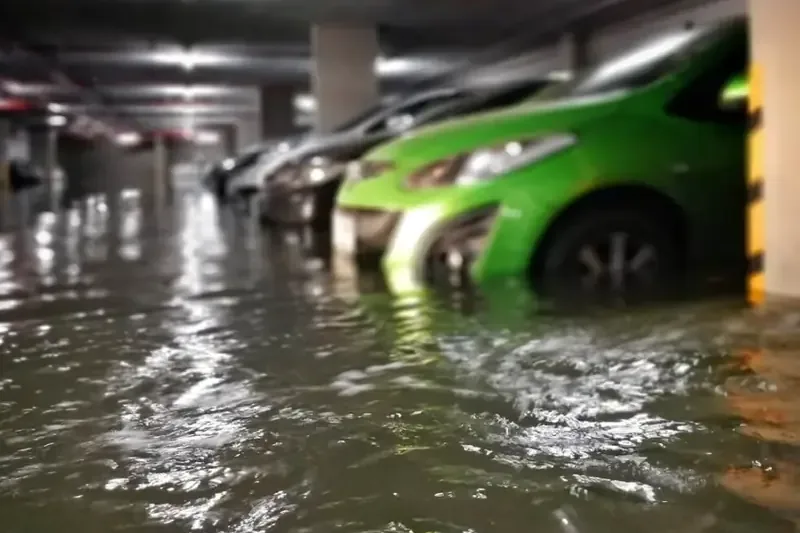
Flood water is water that rises from outside and comes in at ground level: through doors, garages and weep holes after heavy rain, a swollen creek or the river. It carries soil, sewage and chemicals picked up on the way, so the IICRC S500 standard treats it as Category 3 no matter how clear it looks.
Local flood history
In October 2024, after Hurricane Milton, close to 16 inches of rain fell on parts of the Green Swamp overnight and the Withlacoochee River headed for major flood stage. Low yards, roads and homes near the river took water for days, which is why rising water here is planned for, not just storm rain.
Rising water came in under the doors? The restoration team dispatches 24/7.
Report the flood water mark in the houseWhat flood cleanup involves
- Protective gear for everyone working inside
- Extraction of water and silt from floors
- Removal of wet drywall above the water mark
- Removal of soaked carpet, pad and insulation
- An EPA-registered antimicrobial left for its dwell time
- Structural drying with readings each day
Before going back in
Wait until officials say it is safe and the power to wet areas is off. Do not walk through flood water inside the house. Photograph the water level on the walls and every room before anything is moved; that mark tells the adjuster how high the water rose.
Flood coverage is separate
Most homeowners policies exclude rising water, which is usually covered by a separate flood policy. The claim file records the water line in every room so the right policy is applied.
Block walls and slab hold flood water for a long time, so drying often outlasts the cleanup by several days.
Flood Water Cleanup in short
Cleanup after rising water from storms, swollen creeks, low ground or river flooding enters a home: Category 3 extraction, removal of porous materials, antimicrobial treatment and structural drying.