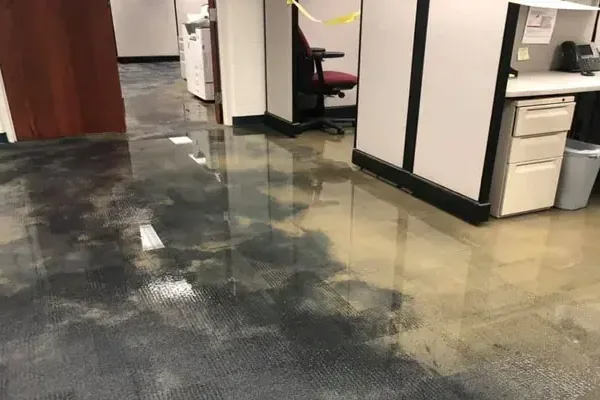
A leak in a downtown shop or office hits stock, records and daily sales all at once. For a business around the historic courthouse square in Dade City, the first day is about stopping the source, protecting what can be saved and keeping a clean record.
Key takeaways
- Shut off the source and the power to wet circuits first, then tell the landlord and any neighbor who shares a wall or ceiling.
- Move stock, files and equipment up off the floor and photograph them before they are touched.
- Water is extracted before drying starts, and the type of water decides what can be kept.
- A written timeline, photographs and receipts support both the insurer and the landlord.
- Dry sections can often reopen while another section is still being dried.
Why a downtown water loss is different from a house
The Historic Pasco County Courthouse, built in 1909, anchors the downtown square in Dade City, and the town grew around the railroad that arrived in 1884. Buildings around a square like this often share walls, floors and ceilings with the business next door.
A leak in one suite can drip into another, which turns one owner's problem into two. Main street deliveries here use ZIP 33525, and that is the area this checklist is written for.
Shared walls and shared responsibility
The lease usually decides who handles the building and who handles the contents. Reading it early avoids arguments about who orders the drying.
Daily sales and downtime
A shop that cannot open loses sales each day, so the plan aims to get dry areas back in use soon. That depends on where the water went and what kind it was.
Stop the source and make the space safe
The source decides everything that follows. A supply pipe leak, a roof leak and a drain backup are three different problems.
- Close the valve that feeds the fixture or the main shutoff for the space.
- Switch off the breaker for wet circuits from a dry spot.
- Tell the landlord or property manager and any neighbor who shares a wall or ceiling.
- Keep customers and staff out of the wet area, and mark it.
- Note whether the water is clean supply water, rain, or water from a drain or sewage backup.
Why the type of water matters
Clean water from a supply pipe lets more materials be saved. Water from a drain or a backup is contaminated, and porous materials it touched are removed rather than dried.
Protect stock, records and equipment
Inventory on a floor shelf wicks water upward fast. Moving it first costs little and saves a lot.
Photograph each item or shelf before it moves, then lift it onto tables, racks or plastic sheeting.
- Lift boxes, shelving contents and stock off the floor.
- Move paper files and records to a dry room, and back up computers.
- Unplug equipment that sits in or beside the water.
- Keep a running list of what was moved and what was damaged.
A sensible order for the first day
Water loss feels chaotic, so a fixed order helps. The order below keeps safety first, protects the record and puts the drying work in front of the right people.
- Find and stop the source, and switch off power to wet circuits.
- Tell the landlord, the property manager and any neighbor who is affected.
- Photograph the space before anything moves.
- Move stock, files and equipment off the floor.
- Start extraction, then set up the drying equipment.
- Write down every step and keep every receipt.
Staff and customers
Staff should know which areas are closed and why. A simple sign and a clear path keep customers away from wet floors and from drying equipment, which has hoses and cords across the floor.
Contacts to gather
The landlord, the insurer, the plumber or roofer who fixes the source and the drying crew all need to be reachable. Keeping their details in one place saves time on a busy day.
Extraction and the first round of drying
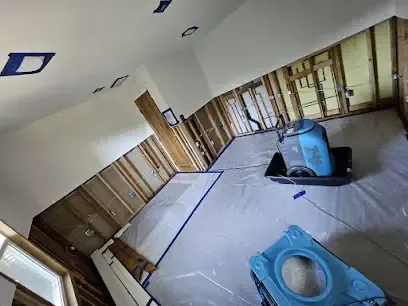
Standing water comes out first with pumps and extractors, which is the job described on the water extraction page. Commercial floors vary, from sealed concrete to tile, vinyl and carpet tile, and each one is handled differently.
After extraction, air movers and dehumidifiers run while readings on walls, floors and the slab are taken on a schedule.
Floors and wall bases
Carpet tile and pad are lifted when they are soaked. Wall bases and the lower part of drywall are checked, because they wick water above the visible stain.
Ceilings and upper floors
If the water came from above, ceiling tiles and drywall are checked and removed where they hold water, so the space below stays safe for staff.
What the drying crew checks that an owner may miss
Water travels. A leak in a back room can reach a front display area under the floor covering, and a ceiling leak can run inside a wall and show up at the baseboard.
The crew's moisture map shows these hidden areas, so the plan covers the real wet footprint instead of only the visible stain. That map is also useful later when the insurer asks what was dried and why.
- Wall cavities behind shelving and displays
- Spaces under floor coverings and mats
- The slab below tile or vinyl
- Suspended ceiling tiles and the space above them
- Storage rooms and back offices
Document it for the insurer and the landlord
Business claims run on paperwork. A clear record makes every later conversation simpler.
The commercial water damage work also adds moisture readings and equipment logs to the file.
- Write down when the water was found and who found it.
- Keep photographs and video from before and after items were moved.
- List damaged stock, equipment and furnishings with their values.
- Save receipts for every emergency step, including materials and cleaning.
- Keep copies of messages with the landlord, neighbors and the insurer.
Deciding what can reopen
Reopening is a decision about each part of the space, not the whole building. Areas that read dry and have no contaminated water can often open while another section is still being dried.
Structural drying readings give a firm result for walls, floors and the slab. A space that looks dry but reads wet is not ready for customers or stock.
- Dry sections with clear walkways may reopen on a limited basis.
- Areas with removed flooring or open walls stay closed until they are rebuilt.
- Anything touched by drain or sewage water stays closed until it is cleaned and disinfected.
Questions
Who handles the cleanup, the tenant or the landlord?
The lease usually decides. Many leases make the landlord responsible for the building and the tenant responsible for contents, so both are told early and the drying plan is agreed in writing.
What should be moved first in a wet shop?
Anything sitting on the floor or on a bottom shelf, then paper records and electronics. Photographs come before the move, so the original condition is recorded.
Can the business stay open during drying?
Sometimes. A dry section with clear walkways can open on a limited basis, while a wet section is closed. Readings and the type of water decide this.
Does a neighbor's leak change anything?
It adds a second party. The source is documented, the neighbor and the landlord are told, and the insurer is told what came from where.
How are lost stock and equipment documented?
A photograph of each item before it is moved, a list with values and the receipts for the emergency steps give the insurer what it needs to review the loss.