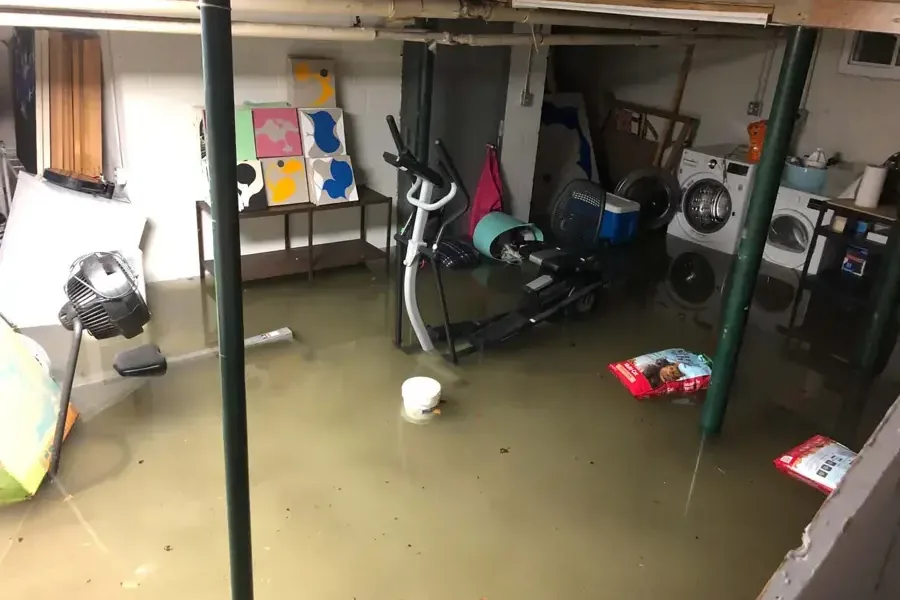
When a hurricane drives rain sideways, water can get into a Dade City house through the roof covering, a window frame or a door threshold, well before any creek or river rises. What happens on the first day decides how much of the ceiling, insulation and flooring can be saved.
Key takeaways
- Wind-driven rain usually enters through the roof, vents, window frames and door thresholds, so the wet rooms are often far from the opening.
- Safety comes first: a sagging ceiling, a wet outlet or standing water around outlets means the breaker is switched off before anything else.
- Photographs of every wet room, taken before anything is moved, make the insurer conversation simpler.
- Water on a slab floor is extracted first, then block walls and framing are dried to meter readings rather than by feel.
- Soaked attic insulation and bulging drywall are heavy and unsafe to leave overhead, so they come down in controlled sections.
How hurricane rain gets into a Dade City house
Dade City is the Pasco County seat, and hurricane season runs from June to November. Summer thunderstorms and named storms bring most of the storm water losses in this part of Florida.
Rain pushed sideways by storm winds finds gaps that ordinary rain never reaches. It works under shingles, behind flashing and around vent stacks, then drops into the attic and soaks the insulation.
Where wind-driven rain usually enters
The opening is rarely where the stain shows up. Water travels along rafters and drywall seams before it finds a low spot.
- Roof covering that lifted or blew off in the wind
- Flashing around vent pipes, chimneys and skylights
- Window frames and door thresholds facing the storm
- Gable vents and soffits that let rain blow into the attic
- Garage door seals and sliding door tracks
What the October 2024 storm shows about the region
During Hurricane Milton in October 2024, close to 16 inches of rain fell on parts of the Green Swamp overnight, and the Withlacoochee River was forecast to reach major flood stage, higher than after Irma in 2017 and the 2004 hurricanes.
That is regional context only. It shows how much water one storm can put on this part of Florida, and it says nothing about damage to any particular street or home.
Safety and power come first
A house that took on rain can hide hazards. Ceiling drywall that holds water can fall without warning, and wet wiring or outlets can energize standing water.
- Stay out from under any ceiling that is sagging, bulging or dripping steadily.
- Switch off the breaker for wet rooms from a dry spot, and leave the main breaker alone if the panel itself is wet.
- Keep ceiling fans, light fixtures and wet outlets off until an electrician has checked them.
- Wear closed shoes in rooms with broken glass, debris or standing water.
- Keep children and pets out of the wet rooms.
What a roofer handles and what a drying crew handles
If the roof itself is open, a roofer is the right contact for a temporary cover. The extraction and drying crew deals with what is already inside the house.
Both jobs matter, and the order matters too: a covered roof stops new water, and extraction stops the water already inside from soaking further.
Photograph everything before it moves
Insurers ask for proof of what the storm did, and a house changes fast once cleanup begins. A short round of photographs taken first protects the record.
Wide shots show the condition of each room. Close shots show stain edges, the tide mark on walls and any visible point of entry.
A slow video walk through the house adds context.
- Note the date of the storm and the date the water was found.
- Photograph the roof opening or window frame from a safe spot on the ground.
- List damaged belongings with a rough age and value.
- Keep wet items an adjuster may want to see until the claim notes say otherwise.
Why the written record helps the drying plan
The same photographs and notes support the hurricane and storm water damage work. Moisture readings taken by the crew are added to that record, so each room has a starting point and an ending point.
Pulling water off floors and out of carpet
Standing water comes out first. Truck-mounted units and portable extractors lift water from carpet, tile and laminate, and the carpet pad is usually removed because it holds water like a sponge.
Most Florida homes are concrete block or frame on a slab. Water that reaches the floor spreads thin across a wide area, then wicks into the base of the walls, which is why water extraction happens before any dehumidifier is set.
Carpet and pad
Carpet can often be lifted, cleaned and dried when the water was rain from the roof. The pad underneath is the part that rarely recovers.
Tack strips and the slab beneath are checked as well, because water sits there longest.
Tile, laminate and wood over a slab
Tile and sealed floors are extracted and then checked at the grout and edges. Laminate and wood can swell at the seams, so those floors are watched for cupping and lifting while the slab dries.
Soaked insulation and bulging ceiling drywall
Insulation that has soaked up rain gets heavy and stops insulating. The drywall under it can swell, bulge and eventually drop.
A bulging ceiling is opened in a controlled way so the water drains where it can be caught, instead of falling across the room. The opening also shows how far the wet section runs.
- Wet insulation is bagged and removed because it will not dry in place.
- Stained drywall is cut back to dry material along straight edges.
- Framing is checked with a moisture meter before anything closes back up.
- The link between the roof opening and the room below is covered on the roof leak water damage page.
Drying the walls, framing and slab
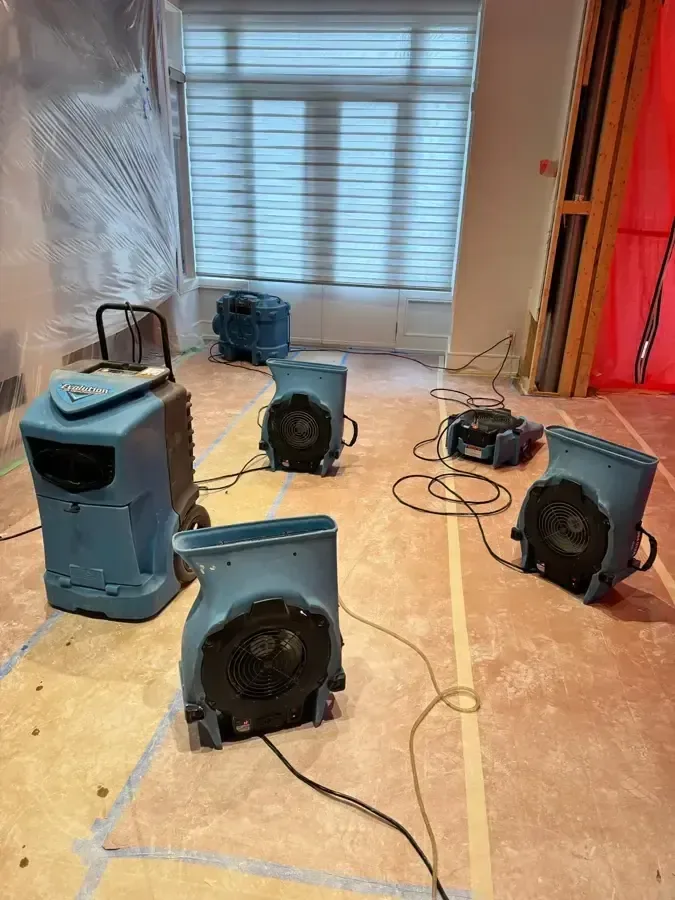
Once the water and the soaked materials are out, the walls, framing and slab still hold moisture. Dehumidifiers and air movers run, and readings are taken on a schedule until the materials match a dry reference.
Florida humidity slows this down, so a house cannot be aired out by opening windows in storm season. Structural drying is monitored with a meter rather than guessed.
Materials that stay damp can grow mold, which is the reason drying speed matters.
Questions to settle before repairs begin
A short list keeps the repair work in the right order and keeps the owner from paying to rebuild a wall that is still wet.
- Is the roof covered, and by whom?
- Which rooms still read wet on the meter?
- Which materials come out, and which stay?
- What does the insurer need in writing before anything is thrown away?
- When will the equipment readings be checked again?
Questions
Is rain that comes through the roof treated like flood water?
Rain from the roof is generally cleaner than water that rises from the ground. It still picks up dust and debris from the attic, and water that stays in porous materials changes over time, so wet materials are checked before they are kept.
Can a wet ceiling be left to dry on its own?
A ceiling that is bulging or dripping should not be left. Drywall that has been soaked through usually needs to be cut out, and the insulation above it is replaced.
Should the power be turned off after storm rain gets in?
Yes for the wet rooms. The breaker for those circuits is switched off from a dry spot, and an electrician checks fixtures and outlets that got wet before they are used again.
Do photographs need to be taken before extraction starts?
They are most useful when taken first, because wet carpet, pad and insulation are removed during the work. Close shots of the damage and wide shots of each room both help.
Does the October 2024 storm mean Dade City homes were damaged?
No. The rainfall and river forecast figures describe the region during that storm. They do not describe damage to any specific street or house here.