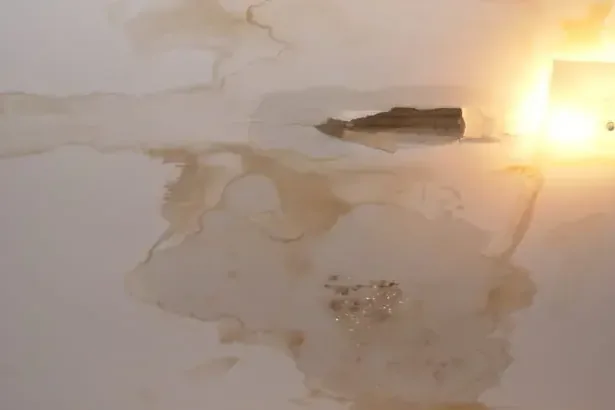
A brown stain or a soft sag in a ceiling under an air handler is one of the most common summer leaks in Zephyrhills. The cause is usually a clogged condensate drain or a pan that has filled and overflowed.
Key takeaways
- Zephyrhills has hot, humid summers, with a mean daily high of 91.3 degrees in July and 91.4 in August, so air conditioners run for long stretches.
- A cooling system pulls water out of the air, and that water has to leave through a drain; when the drain clogs, the pan overflows.
- Turn off the system at the thermostat first, so no more water is produced.
- Wet ceiling drywall and the insulation above it are heavy and can fall, so the stain is treated as a hazard, not just a mark.
- The joist bays above the stain are dried, because the water often travels before it shows.
Why summer heat pushes AC drains past their limit
Zephyrhills has a humid subtropical climate with hot, humid summers and a mean daily high of 91.3 degrees in July and 91.4 in August. An air conditioner in that weather removes a lot of water from the air.
That water collects in a pan and leaves through a drain pipe. Algae, dust and sludge build up in the drain over a long cooling season until it can no longer carry what the unit produces.
Where the air handler sits
Air handlers are commonly in an attic, a closet or a garage. The location decides whether the water reaches a ceiling, a wall or a floor.
The main AC condensate and air handler leak page explains how each location changes the path of the water.
What the first signs look like
A drain overflow gives early hints that are easy to miss. A stain often arrives in the ceiling a room away from the unit.
- A brown or yellow stain on the ceiling that grows after the system runs
- A slight sag or bubble in the paint
- Water dripping from a vent or a light fixture
- A musty smell around the closet or hallway that holds the air handler
- Water in the pan or on the floor around the unit
- A system that shuts itself off, which a safety switch can do when the pan fills
Turn off the system and stop adding water
The first step is not mopping. It is turning the system off at the thermostat, so the unit stops making more condensate while the drain is clogged.
If the ceiling is dripping, a bucket goes underneath and the fixtures in that area are switched off.
- Set the thermostat to off.
- Switch off the breaker for the air handler if it is safe to reach.
- Place a bucket under any drip and move furniture aside.
- Photograph the stain and the area around the air handler.
What the wet ceiling does
Drywall soaks up water and gets heavy. A small stain can hide a large wet section, and a sagging ceiling can drop with little warning.
The insulation above it holds water against the drywall, so it keeps feeding the damage. The ceiling leak water damage page covers how that section is opened and dried.
A bulge is released first
A bulging section is released in a controlled way, so the water drains into a container instead of across the room. Then the crew cuts back to dry material.
Joist bays hold the water
Water runs along joists before it stains the ceiling. The wet bays are opened and dried, because a stain on the surface may be far from the real leak point.
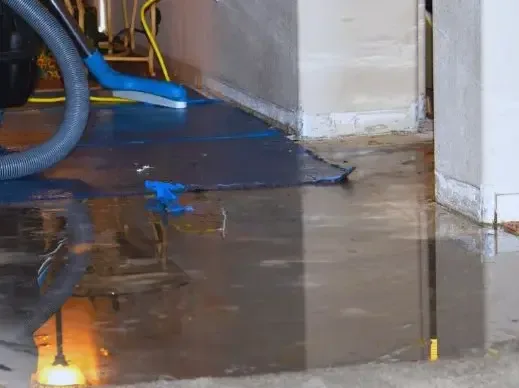
Drying the joist bays and the room below
After the wet drywall and insulation are out, the framing is dried with air movers and a dehumidifier. Meter readings show when the wood matches a dry reference.
Closing a ceiling over damp framing is a mistake that leads to musty smells and a second repair. The room below is dried at the same time, because drips soak carpet and flooring.
- Wet insulation is bagged and replaced.
- Drywall is cut back to dry material with straight edges.
- Framing is dried and checked before it is covered.
- Carpet, pad and trim in the room below are checked.
What is removed and what is saved
Clean condensate water is easier on materials than flood water, so more can be saved. What is saved still depends on how long the materials stayed wet.
A stain that is traced the day it appears usually means a small opening and a short job. A leak that runs through a long cooling season soaks more insulation and framing, and the repair grows with it.
- Wet insulation is removed and replaced.
- Drywall that sagged or stained through is cut out.
- Framing is dried and kept.
- Paint and trim often dry out and stay when the leak was caught early.
- Carpet under a drip can be dried, while the pad usually goes.
When the stain keeps coming back
A repeat stain points to a drain or pan that was cleared but not fixed. A rusted pan, a drain with a bad slope or a trap that clogs again will overflow the next hot spell.
An air conditioning technician clears and repairs the drain. The restoration side, described on the AC drain leak water damage page, handles the wet ceiling and framing.
The Zephyrhills page lists every service offered for the city, including drying and ceiling repair coordination.
A routine that prevents the next overflow
A cooling system in a hot climate needs a little attention before the wet season. A short check of the pan and the drain costs far less than a ceiling repair.
- Look in the pan for standing water or rust.
- Check that the end of the drain pipe is clear and dripping freely when the unit runs.
- Pour water into the pan and watch it drain away.
- Ask a technician to clear and flush the drain during routine service.
- Confirm the safety switch works, so the system shuts off when the pan fills.
What the routine does not replace
None of this replaces service from an air conditioning technician, but it catches problems before water reaches the ceiling.
Questions
Why does an air conditioner leak water in Zephyrhills summers?
The unit removes water from humid air. That water leaves through a condensate drain, and a clogged drain or a full pan sends it into the ceiling or wall.
Is a ceiling stain under an air handler an emergency?
It is a safety issue. Wet drywall and insulation can fall, so the system is turned off, drips are caught and the area is kept clear.
Can the stain just be painted over?
No. Paint over a wet ceiling traps moisture and hides a growing problem. The wet section is opened and dried first.
Who fixes the drain?
An air conditioning technician clears and repairs the drain and pan. Drying the ceiling, framing and flooring is the restoration job.
How long until the ceiling is dry?
That depends on how much water reached the framing. Meter readings decide, not the calendar.