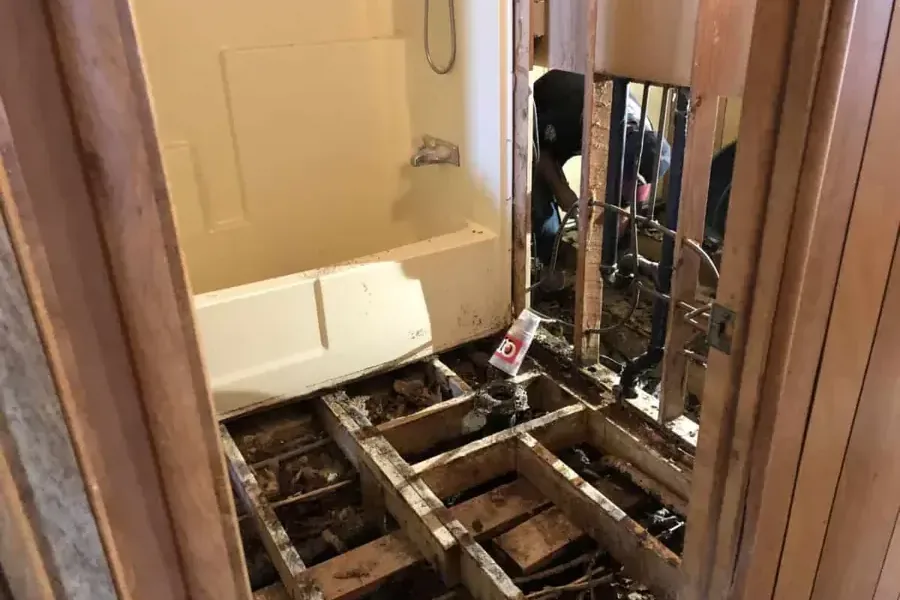
A floor that feels soft or spongy underfoot in a Dade City manufactured home usually means water has been sitting beneath the surface for some time. The stain on top may be small while the floor system underneath is soaked.
Key takeaways
- A soft spot often appears before any stain, because the floor decking absorbs water from below or from the side.
- A manufactured home sits on piers with a belly wrap under the floor, and that wrap can hold water like a tray.
- The first move is to shut off the source, then check the spot with a moisture meter rather than pressing on it.
- The floor is opened where readings say, from above or through the belly wrap, not everywhere.
- Thin wall panels and cabinet bases beside the leak are checked as part of the same job.
Why the floor goes soft before anything shows
Dade City is the Pasco County seat, and manufactured homes here are built like manufactured homes anywhere: a floor deck over framing, sitting on piers. When a pipe, a drain or a roof leak lets water reach that deck, the pressed wood fibers swell and lose strength.
The top layer of vinyl or carpet often looks fine. A soft spot is frequently the first honest sign.
Common sources of the water
The water has to come from somewhere, and the source decides how fast the damage spreads.
- A supply pipe or drain under a bathroom or kitchen floor
- A water heater closet or washer connection
- An air conditioner drain that overflows into the floor
- A roof leak that runs down a wall into the floor edge
Early warning signs worth checking
A soft floor is not the only clue. Small changes around the home can point to a slow leak under the floor.
Any one of these is a reason to look. Two or three together are a strong reason to have the floor read with a moisture meter before the damage spreads.
- Vinyl that bubbles, lifts or shows a dark ring
- Doors that stick or rub where the floor has swelled
- A musty smell that grows in a bathroom or closet
- Cabinet bases that feel soft or look stained at the bottom
- A water bill that climbs with no change in use
- Damp insulation visible at the edge of the belly wrap
How the belly wrap holds water
A manufactured home sits on piers, and a belly wrap closes off the underside of the floor framing. The wrap keeps out pests and weather, but it also catches water that drips down from above.
Insulation in that cavity acts like a sponge. It holds water against the underside of the floor and keeps the deck wet long after the leak stops.
A sagging belly is a warning sign
A wrap that droops between the framing members is usually carrying water or wet insulation. It can be tested with a moisture meter from outside, and a small inspection opening can release trapped water in a controlled way.
First steps when the floor feels spongy
The sequence matters. Stop the source first, then find out how far the water went.
- Shut off the water supply to the home or to the suspected fixture.
- Keep weight off the soft area, because a weak deck can break through.
- Move furniture off the affected section and photograph it.
- Turn off power to circuits that run through a wet floor or wall.
- Use a moisture meter, or have the crew use one, instead of pressing on the floor.
Opening the floor where readings say
The crew starts with water extraction on anything that can be pulled out, then opens the floor only where readings show trapped water. Opening from above removes the covering and a section of deck.
Opening from below means a small cut in the belly wrap.
Inspection openings let water drain and let the crew see whether the framing is wet, stained or soft.
What is usually removed
Wet insulation in the belly cavity, softened deck sections and soaked flooring are taken out. Framing that is only damp is kept and dried.
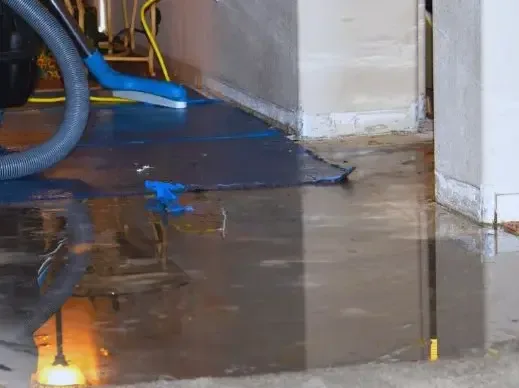
Drying a floor system with little room
A manufactured home has less air volume than a house, so a few machines go a long way. Air movers push dry air through the cavity, and dehumidifiers pull moisture out of the home.
Summer heat and humidity slow the process, so the work is checked with meter readings until the deck and framing match a dry reference. That approach is outlined on the structural drying page.
If the cavity stays wet, mold can grow on the underside of the deck, which is why the readings decide when the job is done.
Air movement under the home during drying
Air under a manufactured home is often still and humid. Drying works best when that air moves and the moisture is carried out of the space instead of settling back onto the floor.
Skirting and vents are checked so the drying air has somewhere to go. Standing water on the ground under the home is removed, because it keeps humidity high no matter how many machines are running.
- Skirting panels are opened or removed where needed.
- Vents are cleared so air can leave.
- Standing water under the home is extracted.
- Ground moisture is checked again once the floor reads dry.
Why thin wall panels need a look too
Wall panels in a manufactured home are thinner than the walls in a block house. Water that wicks up from the floor edge can reach the lower part of the panel and the cabinet bases beside it.
Baseboards, wall bottoms and the backs of cabinets are checked during the same visit.
- Baseboards and wall bottoms are tested with the meter.
- Cabinet bases are checked from inside the cabinet.
- Plumbing and appliance hookups are inspected for the leak source.
Decisions after drying
Once the readings are dry, the openings are repaired. Deck sections, insulation and any damaged belly wrap are replaced, then flooring goes back down.
The same job is described for another city on the Zephyrhills manufactured home page.
Questions
Why does a soft floor appear before a stain?
The floor deck absorbs water from the underside and edges first. Vinyl or carpet on top hides the damage until the deck is already weak.
What is a belly wrap?
It is the covering across the underside of the floor framing in a manufactured home. It protects the insulation and framing, and it can also trap water that drips down from above.
Is the whole floor torn out after a leak?
No. Moisture readings show where the water went, and the crew opens the floor only in those sections.
Can wet insulation under the floor be dried in place?
Usually not. Soaked insulation holds water against the deck, so it is removed and replaced after the cavity dries.
How does the crew know when the floor is dry?
Meter readings on the deck, framing and walls are compared to a dry reference. Drying continues until the readings match.