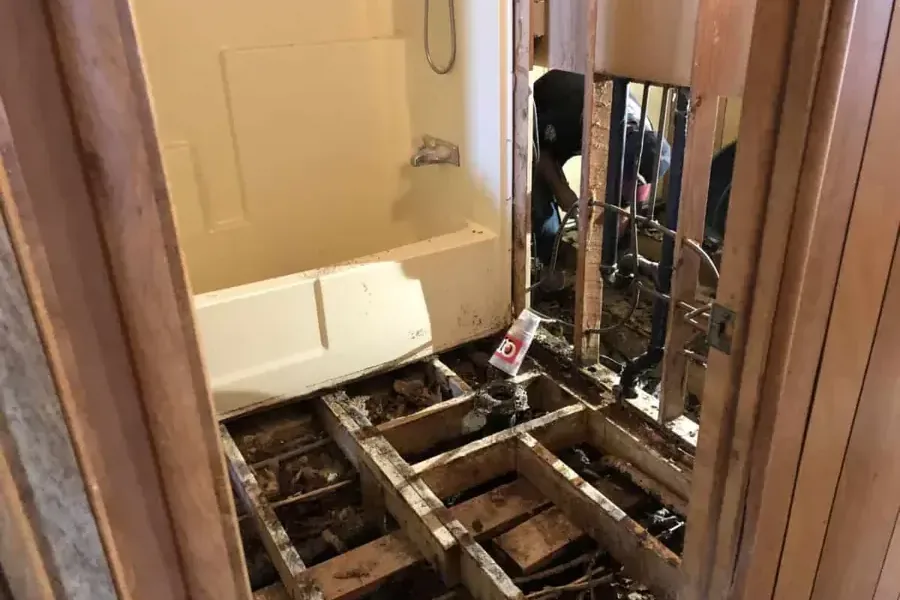
A manufactured home is built differently from a house built on site, and water finds those differences. Floor decking, thin wall panels and the insulation under the floor can all hold moisture, and a leak that looks small on the surface may have wetted all three. Checking each layer is the only way to know how far the water went.
Where water collects
- Floor decking under vinyl or carpet
- Wall panel bottoms behind the baseboard
- Underbelly insulation below the floor
- Duct runs beneath the floor
- Cabinet bases in the kitchen and bath
Leak in the floor of a manufactured home? The crew can check and dry it at any hour.
Ask about floor system dryingDrying the underbelly
Wet insulation below the floor holds water against the decking, so it is checked and, if soaked, removed and replaced. Drying air is directed through small access openings so the floor system dries without tearing up more flooring than the readings call for. Ducts under the floor are checked for water too, because a wet duct can spread moisture to every room it serves.
How the city sees these homes
The City's stormwater assessment puts single mobile homes on one parcel in the same residential class as single-family detached homes. Water damage does not follow a class, so each home is measured on its own readings.
Burst pipes and water heater leaks are two sources; see burst pipe water damage and structural drying. The Zephyrhills water damage page lists other local services.
Manufactured Home Water Damage in short
Water damage mitigation in manufactured and mobile homes after a leak, storm or overflow: floor decking and underbelly checks, wall panel drying, duct inspection and moisture readings to the IICRC S500 standard.