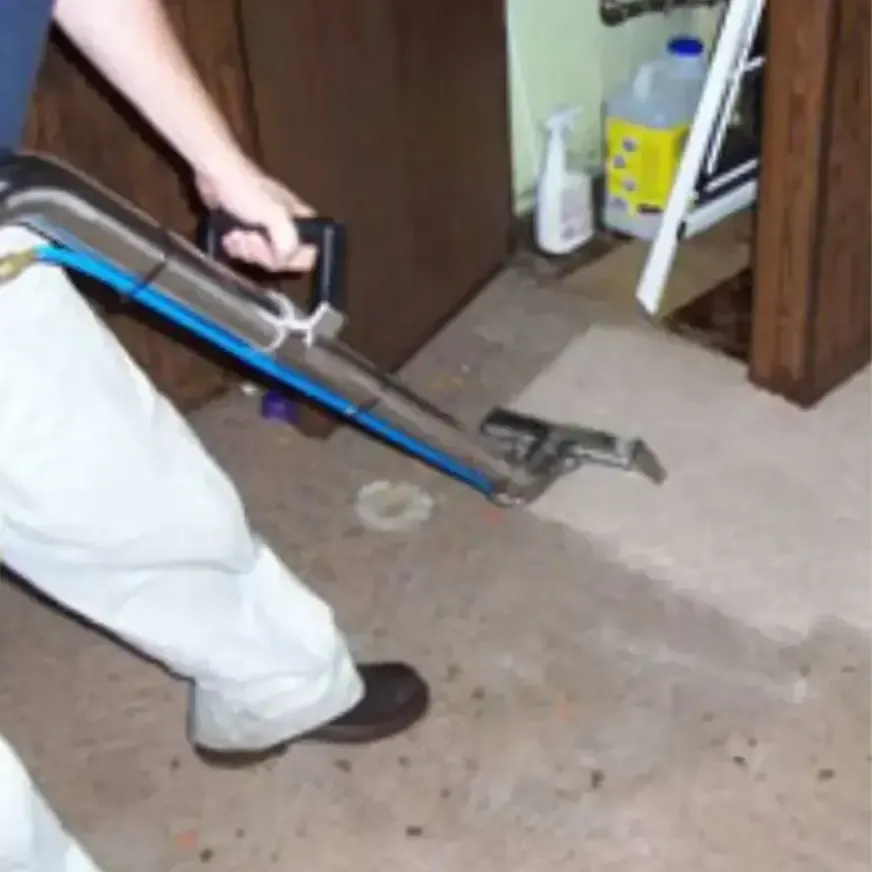
Water extraction is the first job after a flood, a storm leak or a failed fixture: lifting standing water off the floor before it soaks into the subfloor and the bottoms of the walls. Rain here averages 53.03 inches a year, so summer water in a garage or living room is a seasonal worry.
What gets pulled out first
- Standing water on tile, wood and concrete floors
- Soaked carpet and the foam pad underneath it
- Puddles at door thresholds and room corners
- Water trapped beneath cabinet toe kicks
- Wet rugs, boxes and stored belongings in a garage or closet
Standing water on the floor right now? The crew can start extraction at any hour.
Ask about pumping out the roomWhy the summer months change the timing
June through September average between 6.65 and 7.79 inches of rain each month, so that stretch is when storm water is most likely to reach a floor. Left overnight in hot, humid air, standing water starts wicking into baseboards and drywall, which makes early removal matter.
From pump to drying plan
Once the surface water is out, moisture meters check the floor, the walls and the carpet. Whatever still reads wet moves on to structural drying, and a failed pipe behind the water is covered on the burst pipe water damage page.
Water that came from outside or from a drain may be contaminated, and it is handled differently from clean supply water. More about local service sits on the Zephyrhills water damage page.
Water Extraction and Removal in short
Water extraction and removal after a leak, storm or overflow: portable and truck-mounted pumps, weighted extraction wands, wet carpet and pad removal, and moisture readings before drying begins.