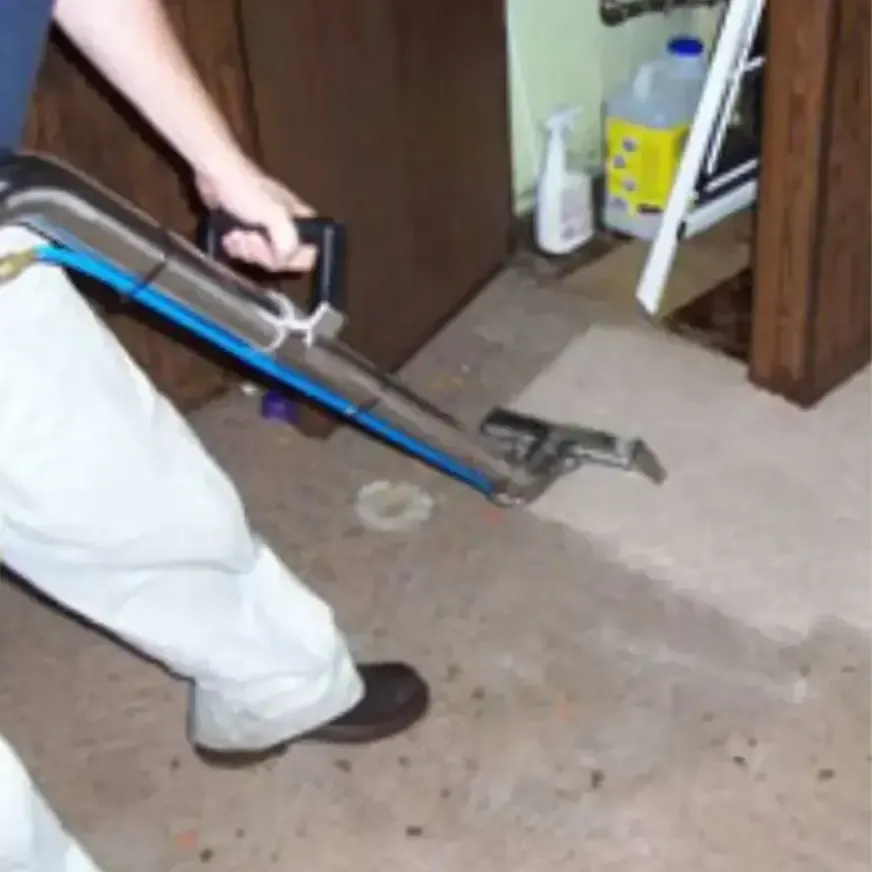
Water that sits on a floor does not stay on the floor. It wicks into baseboards, drywall, cabinet bases and the pad under carpet, and in a humid subtropical climate those materials give up moisture slowly. Extraction gets the bulk of the water out first so the drying phase has less to do.
What the extraction step involves
- Submersible pumps clear deeper standing water from the floor
- Extraction wands lift water from hard floors and carpet
- Soaked carpet pad is cut out and bagged for disposal
- Furniture is lifted or blocked up off wet surfaces
- Water type is judged before anything is handled or moved
Water is on the floor and still spreading. Describe it by phone and the extraction plan starts from what you say.
Ask about pump outWhy sequence matters
Extraction comes before fans and dehumidifiers for a simple reason: equipment dries air and surfaces, not a pool of water. Pulling out the liquid first shortens the drying run, limits how far wicking travels up the walls and gives mold less time to start in the 24 to 48 hour window.
After the water is out
Once the surface water is gone, technicians read the walls, subfloor and cabinets with moisture meters to see what the water reached. Anything that cannot dry in place is removed, and the rest moves into structural drying with equipment matched to the room.
Sewage or flood water follows a stricter path, described under sewage backup cleanup and flood water cleanup, because contaminated water changes what can be kept and how the area must be cleaned afterward.
Water Extraction and Removal in short
Standing water is pumped and extracted from floors, carpet and pad so the structure can start drying, with moisture readings showing what the water reached.