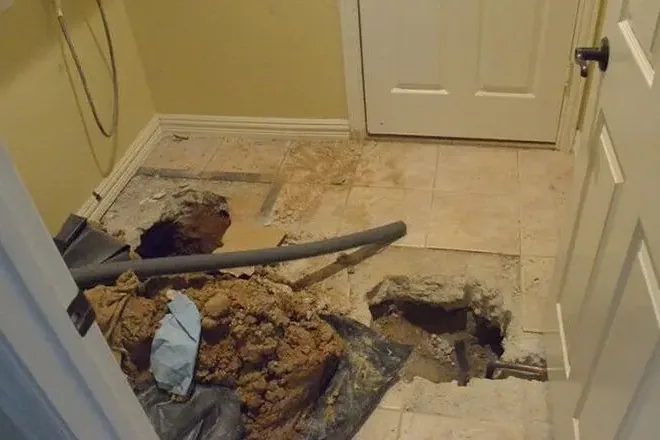
Sewage is a health problem before it is a property problem. Auburndale's wastewater is collected by a public sewer system that feeds two treatment plants run by the City's Wastewater Division, while the City's plan lets existing septic tanks stay in service until sewer becomes available, so backups can happen in either kind of home.
What happens at the start
- Occupants and pets stay out of the affected rooms
- Power is cut to wet areas before entry
- Protective gear is worn by everyone inside
- Liquid is extracted and the source is identified
- Porous materials that soaked it up are removed
Sewage is in the house. Keep everyone out and describe what happened so the cleanup can be explained.
Request sewage removal helpRemoval, cleaning and drying
Carpet, pad, insulation and lower drywall that absorbed sewage cannot be made safe by drying, so they are cut out and bagged. Hard surfaces and framing are scrubbed, treated with a disinfectant and dried until meters read normal, and only then is rebuilding discussed. Air scrubbers can help with odor while the work is under way.
Sewer or septic: what it changes
A public sewer backup and a septic tank problem are both Category 3 for cleanup, but the cause is repaired by different people. A plumber or septic contractor finds the blockage or failure, and the restoration team handles the contaminated water inside.
Once surfaces are sanitized, structural drying removes the remaining moisture, and flood water cleanup explains the same contaminated water rules when the source is outside. Both services share the rule that porous materials are replaced.
Sewage and Septic Backup Cleanup in short
Sewage and septic backups are treated as contaminated water: the liquid is extracted, porous materials are removed, and surfaces are cleaned, sanitized and dried before the area is released.