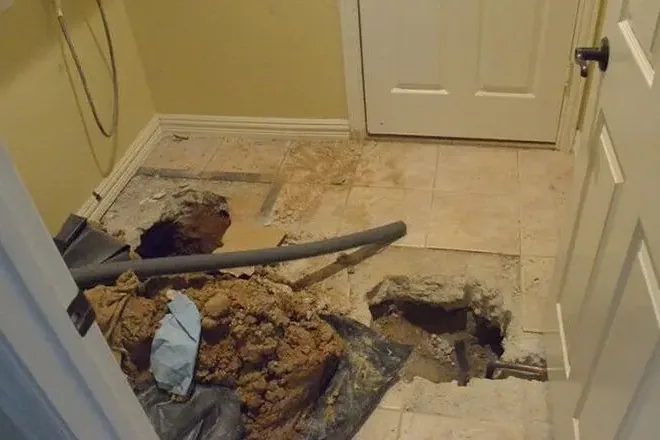
A sewage backup is not a normal water loss. The water carries bacteria and other contaminants, so it should be kept off skin, out of the air handler and away from children and pets until trained crews clean it. Porous materials it touches usually cannot be saved. Even a small backup deserves the same care as a large one, because the contamination is in the water, not in the amount.
What gets removed
- Carpet and pad that took on the water
- Drywall and baseboards at the wet bottoms
- Insulation and cabinet bases that wicked it
- Soaked rugs and cardboard
- Anything porous that cannot be sanitized
Sewage in the house? The crew can pump, remove and disinfect at any hour.
Ask about the backup cleanupWhy disinfection matters
After the water and soaked materials are out, hard surfaces are cleaned and disinfected, and the area is dried with air movers and dehumidifiers. The drying finishes under structural drying until the readings match a dry reference. Disinfectant needs clean surfaces to work, so visible soil is removed first, and the product stays wet on the surface long enough to do its job.
Finding where it came from
A plumber finds and clears the blockage or failure, and the cleanup crew works inside the house on the water, the damaged materials and the surfaces. If the water also came from outside, see flood water cleanup. Clearing the blockage first stops the backup from repeating while the cleanup is under way.
Odor is a sign that porous material is still holding contamination, and it is checked at the end of the job. More local detail sits on the Zephyrhills water damage page.
Sewage and Septic Backup Cleanup in short
Water damage mitigation after a sewage or septic backup: protective extraction, removal of contaminated carpet, pad and drywall, disinfecting of hard surfaces, odor control and drying to the IICRC S500 standard.