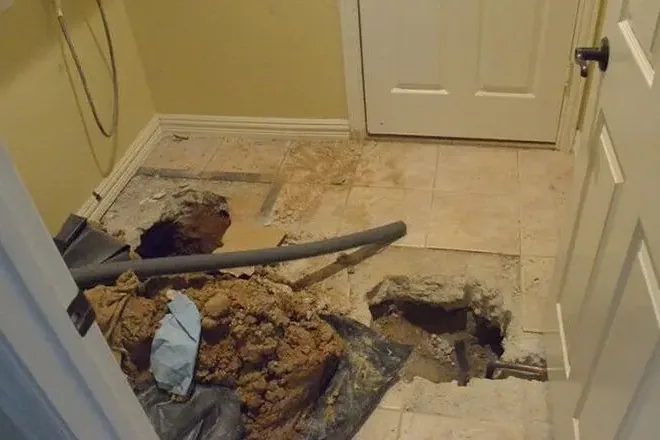
A sewage backup is a health problem as much as a water problem. The water carries bacteria and viruses, so nothing that touched it is treated as clean, and children, pets and anyone with health concerns should stay away from the affected rooms until the cleanup is finished. Ordinary household cleaners are not enough for this kind of water, and soaked porous materials cannot be made safe again.
What gets removed
- Carpet and padding that soaked up sewage
- Drywall and baseboards wetted by the backup
- Cabinet bases that held contaminated water
- Rugs, boxes and soft belongings on the floor
- Debris and solids left on the surface
Sewage on the floor? Keep out of the room and describe the backup to the drying team.
Report the sewage spillWhy a backup happens
Backups usually start with a clogged drain, and a plumber finds the clog and clears it. The city's wastewater goes through its collection system to two wastewater treatment facilities, and its fats, oils and grease program for food service businesses is aimed at keeping grease out of the sewer pipes.
Cleanup and disinfecting
Crews wear protective gear, pump out the contaminated water and remove porous materials in sealed bags. Hard surfaces are cleaned and disinfected, then dehumidifiers and air movers dry the room before anything is rebuilt. Fans keep the air moving while the work is done, and the area is checked again before it is released.
Clean water leaks follow a simpler path, described on the water extraction page, while rising water is covered on the flood water page.
Sewage and Septic Backup Cleanup in short
Sewage restoration removes the contaminated water, takes out carpet, padding and drywall that absorbed it, then cleans, disinfects and dries the area so it is safe to rebuild.