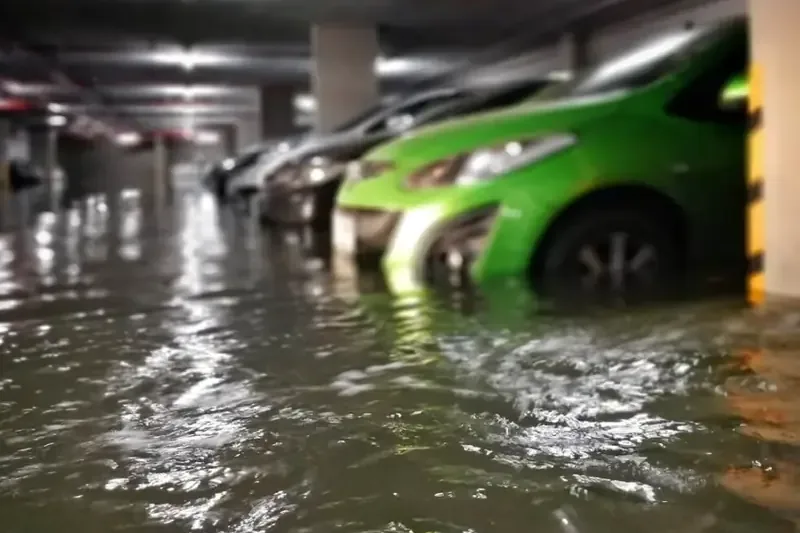
Flood water is different from a leak because it arrives from outside and brings dirt, debris and bacteria with it. Whatever it touches is treated as contaminated, so porous materials such as carpet, padding and drywall are usually removed instead of dried. Risk varies from one property to the next, which is why each job starts with a close look at what the water reached.
What gets removed
- Carpet and padding soaked by flood water
- Drywall and insulation that wicked the water upward
- Mud, silt and debris carried inside
- Soaked furniture that cannot be cleaned
- Contaminated items stored on the floor
Flood water inside the house? Keep everyone out of it and describe the depth to the drying team.
Call about the flooded roomsPumping and disinfecting
Pumps move the water out in bulk, then wet vacuums clear what remains. After the debris is hauled out, hard surfaces and framing are cleaned and disinfected, and the structure is dried with air movers and dehumidifiers before anything is rebuilt. Contents that survive are cleaned or moved to a dry area first.
Heavy rain and local ground
With about 24.1% of the city's total area made up of water, heavy rain and rising water are a regular topic in town. Any one property may see more or less water than its neighbors, so the cleanup plan follows what the meters and the site show.
Storm damage from wind and roof openings is covered on the storm water damage page, and the drying stage is on the structural drying page.
Flood Water Cleanup in short
Flood cleanup pumps out the water, removes mud and debris, takes out materials that absorbed contaminated water, then disinfects and dries the structure with air movers and dehumidifiers.