Structural drying

Structural Drying and Dehumidification in Groveland

Once standing water is gone, wet drywall, subfloors and framing still need controlled drying to stop mold and further damage. Air movers and dehumidifiers do that work while meters track the progress.

(888) 621-2041Discuss drying the wet walls
Air movers Dehumidifiers Daily moisture readings
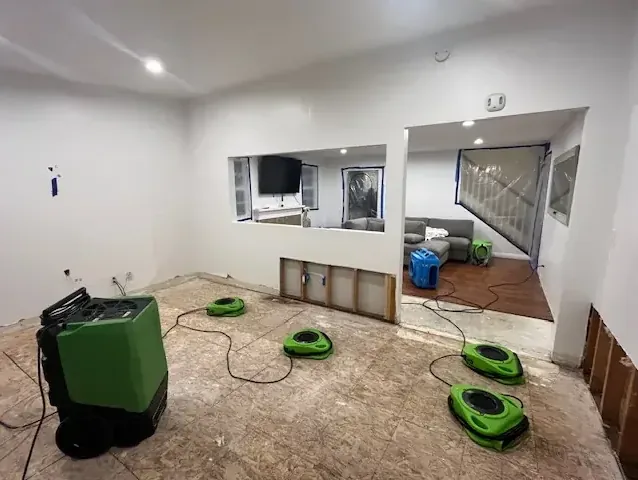
Dehumidifiers and air movers running side by side in a room being dried
EquipmentAir movers, dehumidifiers
Measured byMoisture meters
GoalMatch dry readings
Range$1,000 to $15,000+
Typical cost

What does structural drying and dehumidification cost in Groveland, FL?

A single area at Class 1 or 2 usually costs $1,000 to $3,000 to dry. Several rooms at Class 3 run $3,000 to $7,500, and Class 4 work in slab or block can reach $15,000 or more.

Class 1 or 2, one area
$1,000 to $3,000
  • Air movers
  • One dehumidifier
  • Daily readings
Several rooms, Class 3
$3,000 to $7,500
  • More equipment
  • Wall cavities dried
  • Longer run time
Class 4, slab or block
$7,500 to $15,000+
  • Specialty dehumidifiers
  • Injection drying
  • Extended monitoring

What moves the number: the water category, how many square feet got wet, the material class and how soon drying began.

For a closer planning range, run the water damage cost calculator. These ranges are typical, not a quote.

Do this now

First moves when you find structural drying and dehumidification

  1. Chart the damp zones

    A thermal camera and pin meters outline each wet surface.

  2. Set the machines

    Equipment is matched to the volume of each room.

  3. Monitor daily

    Readings are taken again and the setup is adjusted.

  4. Confirm dry

    Equipment comes out once readings match the dry reference.

The process

How structural drying and dehumidification gets handled, step by step

  1. Map

    Meters mark the wet areas.

  2. Place

    Set air movers and dehumidifiers.

  3. Monitor

    Check readings every visit.

  4. Finish

    Remove equipment at dry targets.

Surface water is the visible part of water damage. The rest is inside drywall, under flooring and within framing, where it can sit for weeks if nothing is done. Structural drying removes that hidden moisture on a plan, using equipment sized to the wet area and readings taken until the structure is dry.

How the equipment works

  • Air movers sweep dry air over damp surfaces
  • Dehumidifiers condense moisture out of the air
  • Desiccant units handle cold or tight spaces
  • Injection systems dry wall cavities
  • Readings and thermal images show the progress

Walls and floors still feel damp after the water is gone? The drying team can measure what is left.

Call about the damp rooms

Why timing matters

Mold can begin to grow on wet material in 24 to 48 hours, which is the reason drying is not left for later. Keeping the humidity down and the air moving removes the conditions that growth needs. Wood framing, drywall and subfloors release moisture at different rates, so the equipment plan changes room by room.

Drying classes

Jobs are rated Class 1 to Class 4 by how much material is wet and how slowly it releases water. A Class 1 or 2 job is one area with light absorption, while Class 4 means dense materials such as slab or block that need specialty drying.

Extraction comes before drying, as described on the water extraction page, and the same equipment is used after the storms covered on the storm damage page.

Structural Drying and Dehumidification in short

Structural drying uses air movers, dehumidifiers and moisture meters to pull water out of walls, floors and framing, with readings repeated until the building matches dry reference areas.

Service area

Structural drying and dehumidification here and in nearby communities

Service area map

Drying equipment goes to homes and businesses across ZIP codes 34736 and 34737, from Lexington Estates and Lexington Village to South Lake Avenue, the industrial park and the State Road 19 and State Road 33/50 corridors, and everything between them.

The same service nearby: structural drying and dehumidification in Dade City, Mascotte, Bushnell.

Water damage restoration in Groveland · every town covered

FAQ

Structural Drying and Dehumidification questions, answered

How long does structural drying take?

The answer follows the materials and the amount of water they soaked up. The machines stay until repeated readings match dry reference areas, not for a fixed number of days.

Why is the equipment so loud?

Air movers and dehumidifiers run all day to move air and pull moisture. The noise is the sound of the drying working, and it ends when the readings are normal.

Does the equipment raise the power bill?

It draws power while it runs, so the team sizes the equipment to the job and removes it as soon as the readings are dry.

Can I turn the dehumidifier off at night?

It is best to leave it running, because stopping lets moisture settle back into the materials. Ask the team before changing the setup.

What do the moisture readings mean?

Each material has a dry reading, and the team compares wet areas with an unaffected reference. When the numbers match, the drying goal has been met.

24/7 emergency dispatch

Hidden moisture in walls and subfloors needs a drying plan

Describe the rooms that were wet and when the water was removed, and the team will explain the equipment and readings.

(888) 621-2041 · extraction crews 24/7