Drying to the meter

Structural Drying in Mascotte, FL

Wood framing, subfloors and drywall are dried to meter readings after the water is removed. Dehumidifiers and air movers run together, and the equipment stays until the structure reads dry.

(888) 621-2041Phone about drying the home
Meter-led drying Dehumidifiers and air movers Final readings kept
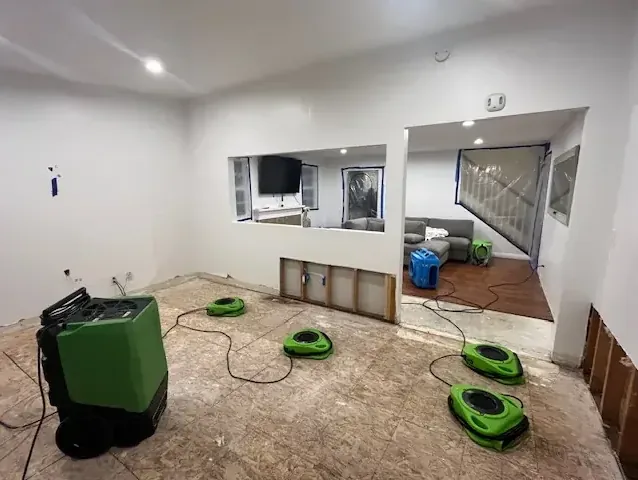
Dehumidifiers and air movers running side by side to dry out a room
MethodAir movers and dehumidifiers
Judged byMoisture meter readings
Typical spanSeveral days
StartsAfter water removal
Typical cost

What does structural drying and dehumidification cost in Mascotte, FL?

One area of Class 1 or 2 drying often costs $1,000 to $3,000. Several rooms of Class 3 run $3,000 to $7,500, while Class 4 slab or block can reach $7,500 to $15,000 or more.

Class 1 or 2, one area
$1,000 to $3,000
  • Moisture mapping
  • A few air movers
  • One dehumidifier
Several rooms, Class 3
$3,000 to $7,500
  • More equipment
  • Wall cavities dried
  • Daily readings
Class 4, slab or block
$7,500 to $15,000+
  • Specialty drying
  • Extended runtime
  • Final dry report

What moves the number: the water category, how many square feet got wet, the material class and how soon drying began.

For a closer planning range, run the water damage cost calculator. These ranges are typical, not a quote.

Do this now

First moves when you find structural drying and dehumidification

  1. Map the moisture

    A meter marks the wet walls, floors and ceilings.

  2. Place equipment

    Air movers and dehumidifiers go where they work best.

  3. Read each visit

    Readings show which materials are drying and which lag.

  4. Remove at dry

    Equipment leaves only when the readings are normal.

The process

How structural drying and dehumidification gets handled, step by step

  1. Map

    Mark the wet materials.

  2. Place

    Set up equipment.

  3. Read

    Check meters each visit.

  4. Finish

    Remove equipment at dry.

Pulling out the standing water is only half the job. Wood framing, subfloors and drywall keep moisture inside, and that moisture feeds swelling, warping and later mold if it is left. Structural drying removes it in a controlled way, and a meter, not a guess, says when it is done. Sealing off the room helps too, since open doors and windows let humid outside air back in.

How the equipment works

  • Air movers push dry air across wet surfaces
  • Dehumidifiers pull the released moisture out of the air
  • Wall cavities are dried through small openings
  • Subfloors dry through lifted flooring sections
  • Doors and windows stay closed so the room can dry

Water removed but the house still feels damp? Call and the crew will explain how readings show what is still wet.

Ask how the drying works

Reading the building

Each material dries at its own pace, so readings are taken in several spots and compared with a dry spot elsewhere in the house. Thick wood framing and concrete release moisture slowly, while drywall and carpet give it up faster. Equipment is moved as the readings change. Checking only the surface is not enough, since drywall can feel dry while the framing behind it still reads wet.

When the drying is done

A dry reading is the signal to remove equipment and start repairs. The final readings are logged with photos, so the insurer sees that the structure reached a dry standard before drywall, flooring or paint went back on. For the removal step before drying, see water extraction in Mascotte.

Slab houses are covered under slab leak water damage.

Structural Drying and Dehumidification in short

Structural drying for Mascotte homes: dehumidifiers and air movers dry framing, subfloors and drywall until meters show the building materials are normal and ready for repair.

Service area

Structural drying and dehumidification here and in nearby communities

Service area map

Drying crews work across ZIP 34753, including homes by State Road 50 and the blocks near Mascotte City Hall. The city grew from 2,687 residents in 2000 to 6,609 in 2020, and the crew serves homes across all of it.

The same service nearby: structural drying and dehumidification in Dade City, Groveland, Bushnell.

Water damage restoration in Mascotte · every town covered

FAQ

Structural Drying and Dehumidification questions, answered

How long does structural drying take?

Most jobs run several days, depending on the materials and the amount of water. Dense framing and concrete take longer than drywall, and humid weather can add time.

Why does the equipment run all day?

Moisture only leaves the materials while dry air keeps moving across them, so the equipment runs steadily until readings reach the dry reference. Turning it off early lets wet materials start reabsorbing moisture from the air.

Can the AC run during drying?

Usually the air conditioning helps keep the room cool, but the crew may ask for it to be adjusted so the dehumidifiers work properly.

Does drying prevent mold?

It lowers the risk. Mold can start in 24 to 48 hours in wet materials, and bringing them to normal readings removes what it needs.

How is dry decided?

Readings from the wet area are compared with a dry reference in the same house. Equipment comes out once they match.

24/7 emergency dispatch

Hidden moisture keeps working

Framing and subfloors keep moisture long after surfaces look dry, so a prompt call starts controlled drying before warping begins.

(888) 621-2041 · extraction crews 24/7