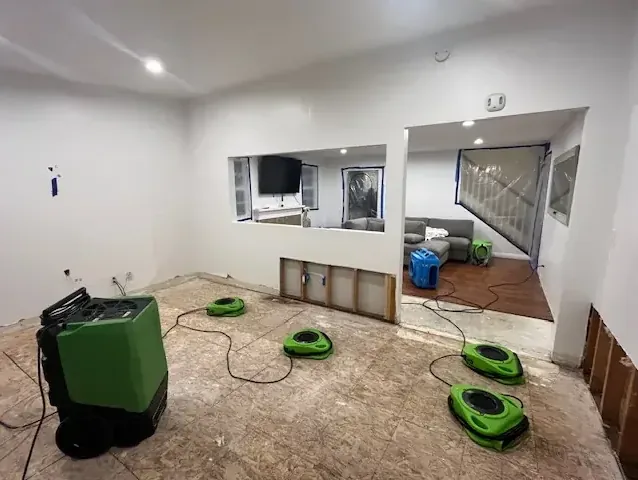
Removing standing water is only half of a water loss. Drywall, framing and subfloor keep moisture inside, and in a humid subtropical climate with a hot summer like Bushnell's, they will not shed it fast on their own. Structural drying is the controlled process that finishes the job.
The four classes of water loss
- Class 1: little wet material, slow evaporation
- Class 2: carpet and wall bases wet, larger area
- Class 3: water from above, ceilings and walls soaked
- Class 4: deep saturation in concrete, hardwood or block
- Equipment choices change with each class
Describe what was wet and when the water was removed, and the crew explains how air movers and dehumidifiers would be placed.
Report the wet framingHow drying equipment works
Air movers push dry air across wet surfaces and into wall cavities, while dehumidifiers remove the moisture those surfaces release. Hot weather helps evaporation but also loads the air with humidity, so the equipment count is set by the room size and the readings, not by a rule of thumb. Containment sheeting can keep the drying zone separate from dry rooms.
Knowing when drying is finished
Readings are taken each day on the same spots, and the settings change as the numbers fall. The equipment stays until affected materials match unaffected ones. No fixed number of days is promised, because the materials and the humidity decide.
Standing water is removed first under water extraction, and wet concrete is covered under slab leak water damage.
Structural Drying and Dehumidification in short
Wet materials release moisture slowly, so equipment is placed by room and adjusted as readings fall. Monitoring continues until framing, subfloor and drywall match unaffected areas.