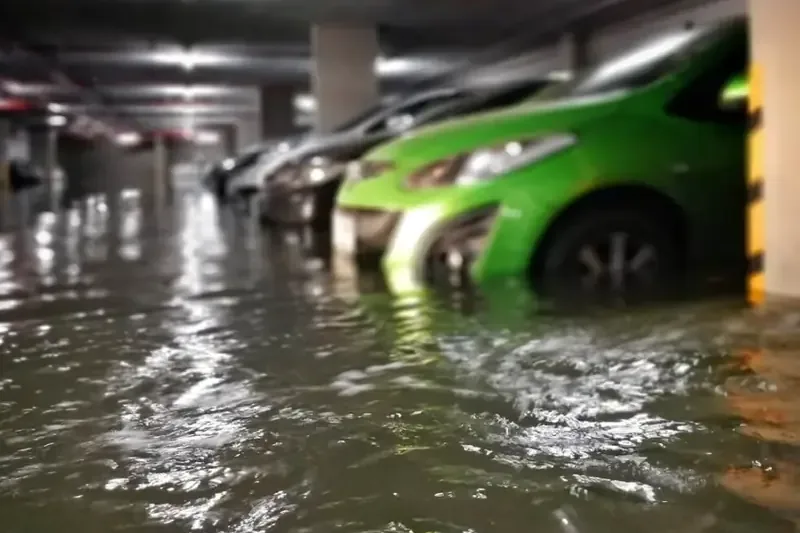
Flood water behaves differently from a pipe leak because it arrives from outside, crosses yards and roads and brings soil, bacteria and debris with it. Anything it touches is treated as contaminated, so the job is about removal and cleaning as much as it is about drying.
What flood water leaves behind
- A layer of silt on floors and in wall cavities
- Soaked carpet, pad and insulation that must go
- Drywall wet well above the floor
- Furniture and cabinets with swollen particleboard
- Bacteria on every surface the water touched
Describe how high the water got and which rooms it reached, and the crew explains how pumping, removal and drying would proceed.
Explain the high waterFlood cleanup step by step
Water is pumped out gradually so walls and floors are not stressed. Silt and ruined materials are shoveled and bagged, drywall is cut above the high water mark, and the exposed framing is cleaned and disinfected before drying equipment goes in. Moisture readings then show when it is safe to close up. Contents are sorted into what can be cleaned and what must be discarded.
Flood context in Sumter County
After Hurricane Milton in October 2024, flooding along the Withlacoochee River was a concern across Sumter County. The area around Bushnell is relatively flat, with creeks and streams passing under roads on bridges. Reports from that event do not name Bushnell as flooded, so no local flood is claimed.
The first removal step is described under water extraction, and backups from drains are covered under sewage backup cleanup.
Flood Water Cleanup in short
Flood water enters at ground level and leaves silt behind. The crew pumps it out, removes ruined porous materials, cleans and disinfects surfaces and dries the framing.