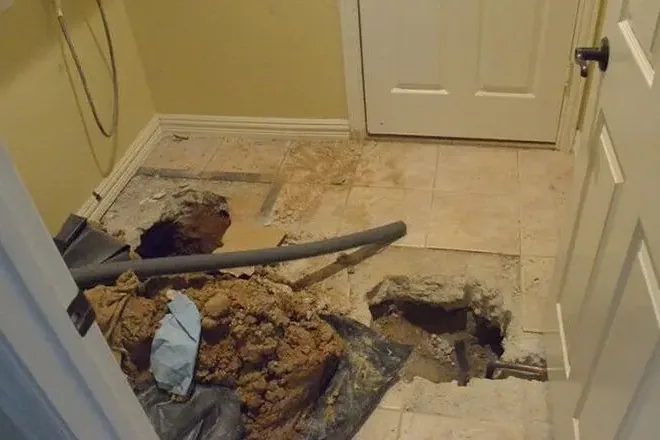
A sewage backup is more than a wet floor. The water carries bacteria and pathogens from the drain, and it settles into carpet, drywall and anything porous. Nobody should wade through it, run fans in it or try to wash it away with a hose, because each of those spreads the contamination further. Even a small backup can contaminate a whole room, because the water wicks into baseboards and drywall and splashes onto nearby surfaces.
What is removed
- Carpet and pad that touched the backup
- Drywall and insulation soaked by the water
- Cabinet kicks and particleboard that swelled
- Upholstered furniture and mattresses
- Baseboard and trim that cannot be sanitized
Describe where the backup came from and how far it spread, and the crew explains the protective cleanup and drying plan.
Call about the backup nowProtective cleanup in order
Crews wear gloves, boots and respirators and seal the work area so contamination does not drift into clean rooms. Liquid is extracted, porous materials are bagged and removed, and hard surfaces are cleaned and disinfected before air movers and dehumidifiers dry the exposed framing. Air scrubbers may run during removal to hold down airborne particles.
Before and after the cleanup
A plumber clears or repairs the blocked drain, because a backup can return if the cause stays. Photos taken early help with any insurance claim, and the cleanup crew keeps a written record of what was removed.
Drying that follows the cleanup is described under structural drying, and a backup that began with storm runoff is also covered under flood water cleanup.
Sewage and Septic Backup Cleanup in short
Backups from a toilet, tub or floor drain release black water into the house. The crew extracts it, removes soaked porous materials, disinfects surfaces and dries the structure.