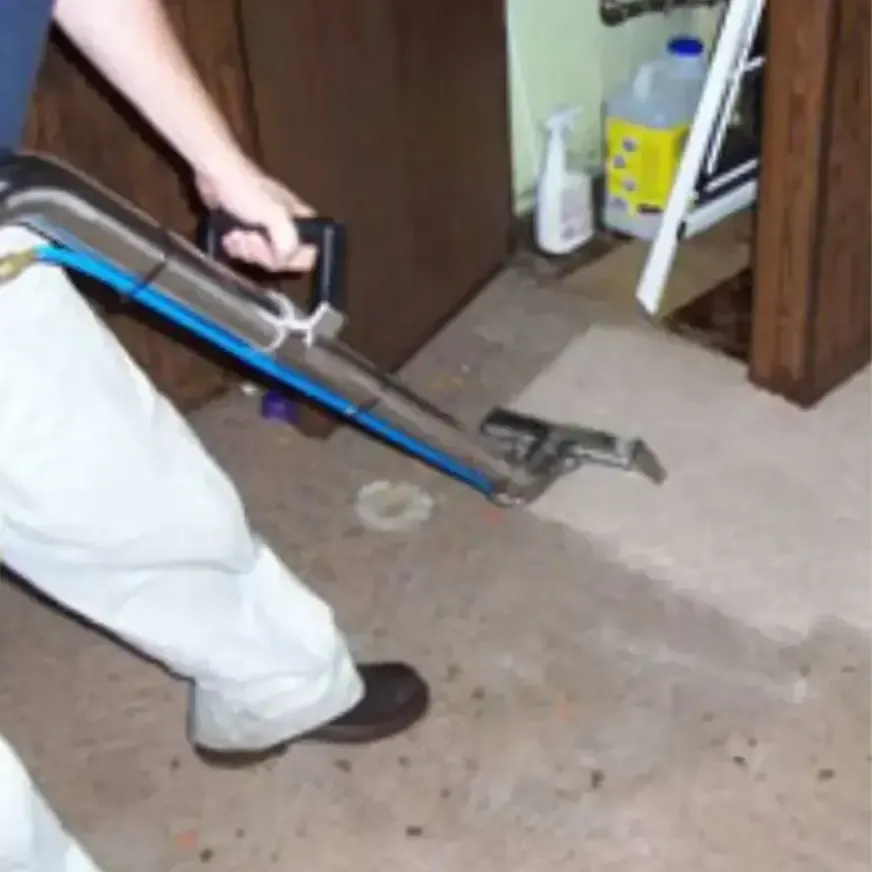
Standing water does most of its harm early, when drywall wicks it upward and carpet pad turns into a sponge. Extraction in Bushnell homes starts with finding the water category, then pulling as much liquid out as the equipment can reach before any fans run.
What the crew removes first
- Standing water from tile, wood, laminate and concrete floors
- Saturated carpet and pad that will not dry in place
- Water trapped under cabinets and behind toe kicks
- Wet insulation and baseboard soaked by the flow
- Contaminated materials when the water is gray or black
Describe the water and where it started, and the crew explains how pumps, wands and drying equipment would be used.
Clear the soaked floorsHow extraction works in a wet house
Submersible pumps clear deep water first. Wet vacuums and wands then sweep the floor in rows, and carpet is lifted so the pad can be pulled and the subfloor checked. A moisture meter then shows what the surface water left behind inside the walls and under the flooring.
Why humidity makes speed matter
Bushnell has a humid subtropical climate with a hot summer, so wet materials rarely dry on their own. Extraction removes the bulk of the water, and structural drying pulls out what soaked into the framing.
Water left in place can support mold growth within 24 to 48 hours. If a burst pipe caused it, burst pipe water damage covers that path, and contaminated water from outside is handled under flood water cleanup.
Water Extraction and Removal in short
Pumps, extractors and wet vacuums remove standing water from floors and carpet, and wet materials are sorted into those that can dry in place and those that must go.