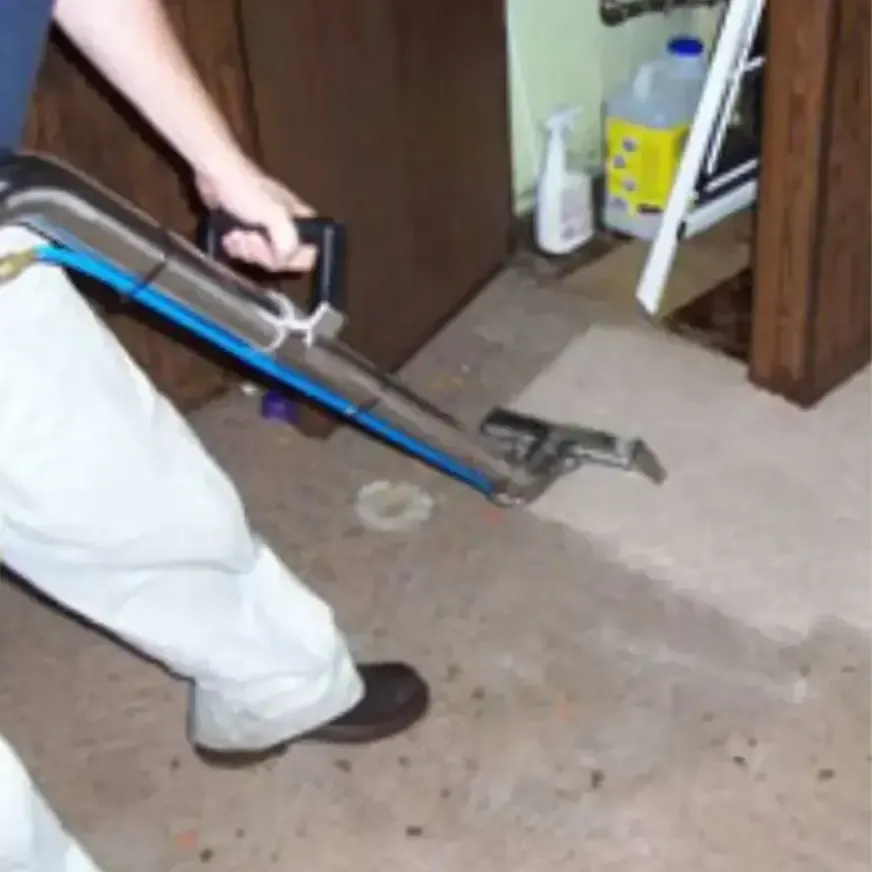
Water left on a floor does not stay on the floor. It wicks into baseboards, drywall and the padding under carpet, and the longer it sits the more material has to be replaced. Extraction is the first job because it removes the bulk of the water before any drying equipment is set.
What gets removed first
- Pooled water on tile, vinyl and concrete
- Water trapped under carpet and padding
- Water that ran into a closet or hallway
- Wet insulation or debris that holds moisture
- Floor water from a failed hose, tank or pipe
Standing water on the floor right now? Describe it and the drying team will explain what comes next.
Call and describe the waterWhy speed matters for wet materials
Drywall and wood take on moisture quickly, and padding acts like a sponge. Pulling the water out early often means carpet can be lifted and dried instead of thrown away, and it keeps baseboards from swelling. Delay mostly adds to the scope, the equipment days and the final cost.
When extraction leads into drying
Extraction never finishes the job alone. Moisture stays in the subfloor and lower walls after the surface water is gone, so the team measures with meters and sets air movers and dehumidifiers, as described on the structural drying page.
Pipe failures often start the same way, and the burst pipe page explains how the source is stopped before cleanup begins.
Water Extraction and Removal in short
Extraction uses submersible pumps and wet vacuums to pull standing water out of a home, and moisture readings then decide which flooring and drywall can be saved.