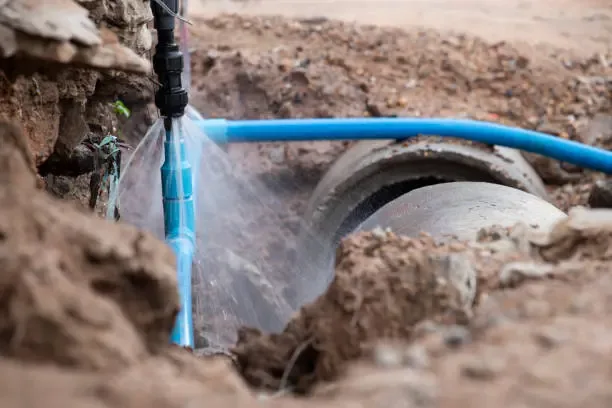
A pressurized supply pipe releases water for as long as the valve stays open, which is why a burst can soak a ceiling, a wall cavity and the floor below before the break is even found. The first job is always the shutoff, and the second is getting the water out before it travels.
What a burst pipe soaks
- Drywall and insulation inside the wall cavity
- Ceilings below an upstairs break
- Cabinet bases and vanity floors
- Flooring, subfloor and carpet pad
- Baseboard, trim and door casings
Describe where the pipe broke and which rooms are wet, and the crew explains the shutoff, extraction and drying plan.
Report the broken pipeStopping the flow and drying
Once the supply is off, the crew extracts standing water and uses a moisture meter to trace the wet area behind the surface. Drywall is opened only where readings call for it, then air movers and dehumidifiers run until the cavity reads like an unaffected wall.
Where the water comes from
The City of Bushnell water system draws its supply from groundwater, and the 2024 Florida DEP source water assessment lists 2 active wells in the Floridan Aquifer. Water from a broken pipe starts out clean, but it turns gray if materials stay wet, so early drying protects what can be saved.
Mold can start within 24 to 48 hours in wet drywall, so the drying plan matters as much as the shutoff. For the pump-out step, see water extraction.
Burst Pipe Water Damage in short
Supply pipe failures send clean water through ceilings, walls and floors. The crew extracts it, opens wet cavities where needed and dries the framing until readings are normal.