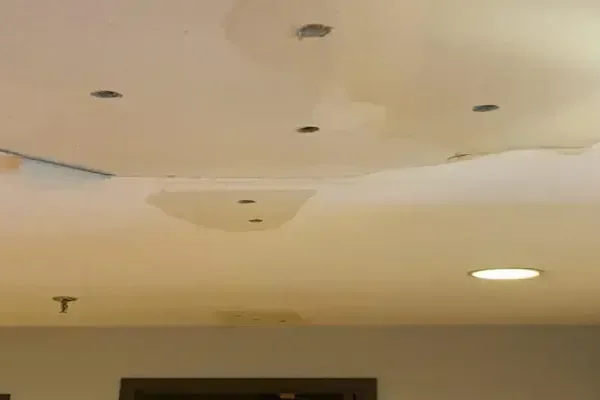
Ceilings hold water until the drywall can no longer carry it, and then it comes down all at once. A brown ring, a bulge or a steady drip tells the occupant that water is already sitting in the cavity above. Whether it came from plumbing upstairs, an air handler in the attic or the roof, the wet section needs attention before the stain grows.
What to do while it is wet
- Switch off power to rooms with a wet ceiling or dripping light fixture
- Move furniture and place buckets under active drips
- Stay out from under a bulging section until trapped water is released
- Photograph the stain before any cutting starts
- Note whether the leak follows rain or plumbing use
Describe the stain or sag and where the water seems to come from, and the crew explains how the ceiling would be opened and dried.
Talk through the wet ceilingHow a wet ceiling is dried
The crew relieves trapped water through a small opening, then removes drywall that has sagged, softened or stained through. The cavity above is dried with air movers, and wet insulation is replaced, since it holds water against the joists long after the surface looks dry.
Finding the source
A leak that follows rain points to the roof, covered under roof leak water damage, while one that follows the cooling cycle points to AC drain leaks. A leak that tracks plumbing use points to a supply or drain pipe above.
A plumber, roofer or cooling technician repairs the source. The restoration crew dries the structure and leaves it ready for new drywall and paint.
Ceiling Leak Water Damage in short
Water from plumbing, an air handler or a roof opening collects above a ceiling until the drywall gives. The crew finds the source, relieves trapped water, removes wet sections and dries the cavity.