Manufactured home leaks

Manufactured Home Water Damage in Auburndale

A leak or storm water in a manufactured home can reach the flooring, the walls and the space underneath. Extraction comes first, then each layer is opened, dried and checked with moisture meters.

(888) 621-2041Call about the manufactured home leak
Subfloor checks Underside drying Wall readings
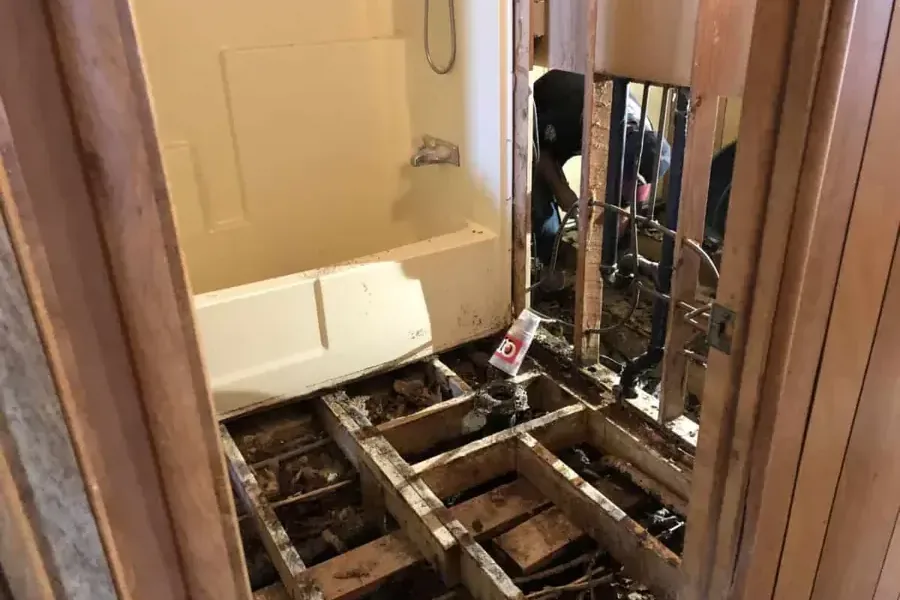
A bathroom floor cut open to the joists in a manufactured home to dry the soaked decking underneath
Layers to checkFlooring, subfloor, walls
Hidden spotUnderside and insulation
Usual sourcesPlumbing, roof, storm
Verified byMoisture readings
Typical cost

What does manufactured home water damage cost in Auburndale, FL?

Cost follows how many rooms are wet and how much flooring and underside insulation must come out. A single leak caught early is the smallest band, and a flood or long leak that soaked the decking is the largest.

One leak, caught early
$1,000 to $3,000
  • One area wet
  • Flooring section lifted
  • Short drying
Several rooms
$3,000 to $7,000
  • Several rooms wet
  • Subfloor opened
  • Insulation replaced
Flood or long leak
$7,000 to $14,000+
  • Decking soaked
  • Underside opened
  • Extended drying

What moves the number: the water category, how many square feet got wet, the material class and how soon drying began.

For a closer planning range, run the water damage cost calculator. These ranges are typical, not a quote.

Do this now

First moves when you find manufactured home water damage

  1. Stop the water

    Shut the supply valve or cover the roof opening.

  2. Extract and map

    Standing water is removed and meters trace wet decking and walls.

  3. Open and dry

    Flooring sections come up so the subfloor and underside can dry.

  4. Verify

    Readings are compared with dry materials before the floor is closed.

The process

How manufactured home water damage gets handled, step by step

  1. Stop

    Shut off the source

  2. Extract

    Remove standing water

  3. Open

    Lift flooring to reach the decking

  4. Dry

    Dehumidify the floor and the underside

A manufactured home is built in layers that dry at different speeds. Water that gets past the flooring can sit in the subfloor and the insulation underneath, and a leak from a roof seam or a supply fitting can run down a wall cavity before any stain shows. Cleanup follows each layer.

Where water hides in a manufactured home

  • Under vinyl or laminate over the floor decking
  • In the insulation beneath the floor
  • Inside exterior walls near roof seams
  • Behind cabinets in kitchens and baths
  • Along the underside where storm water pooled

Water got into the floor or walls. Describe what happened and the opening and drying steps can be explained.

Ask about the home

Opening the floor to dry it

When the decking has soaked through, a section of flooring is cut out so air movers and dehumidifiers can reach the joists and the underside. Wet insulation below is replaced, since it holds moisture against the framing, and readings continue until the structure matches dry reference materials.

Storm water and roof seams

Heavy rain can enter at roof seams, vents and window frames as easily as through a damaged shingle. The hurricane and storm water damage service explains how rain damage is documented, and the roof leak water damage service covers the attic side.

Standing water on the floor is handled first through water extraction, because trapped water under flooring is what keeps the subfloor wet longest. A plumber or roofer repairs the cause.

Manufactured Home Water Damage in short

Leaks and storm water that reach a manufactured home are extracted, and the flooring, subfloor, walls and underside are opened where needed and dried until moisture readings return to normal.

Service area

Manufactured home water damage here and in nearby communities

Service area map

Manufactured home water damage is handled in Auburndale and ZIP 33823, along Spring Road, Recker Highway, US 92 and the Polk Parkway, near Kville Avenue and Sun Acres Boulevard, and across surrounding Polk County streets, as well as Arietta Point.

The same service nearby: manufactured home water damage in Dade City, Zephyrhills, Groveland.

Water damage restoration in Auburndale · every town covered

FAQ

Manufactured Home Water Damage questions, answered

Why is a manufactured home different to dry?

The floor is built in layers, and water that reaches the decking or the insulation underneath can stay trapped. Each layer needs its own readings and its own drying path.

Does the floor have to be cut open?

Often, when meters show wet decking under intact flooring. A small section is cut so air can reach the joists, and it is patched after the readings show the structure is dry.

Can storm water get into the underside?

Yes. Water pooling around the home can reach the underside and wet insulation and framing there. It is documented and dried like any other storm water loss.

Is wet insulation under the floor replaced?

Usually, if it was soaked. Insulation holds water against the framing, so it is replaced rather than left to dry, and the cavity is ventilated while the floor stays open.

Who repairs the plumbing or the roof seam?

A plumber or a roofer repairs the cause. The restoration team removes the water, dries the structure and provides moisture readings and photos for the insurance file.

24/7 emergency dispatch

A leak in an Auburndale manufactured home can sit unseen in the floor

Tell the team where the water entered and which rooms feel soft or damp, and the extraction and drying plan will be explained.

(888) 621-2041 · extraction crews 24/7