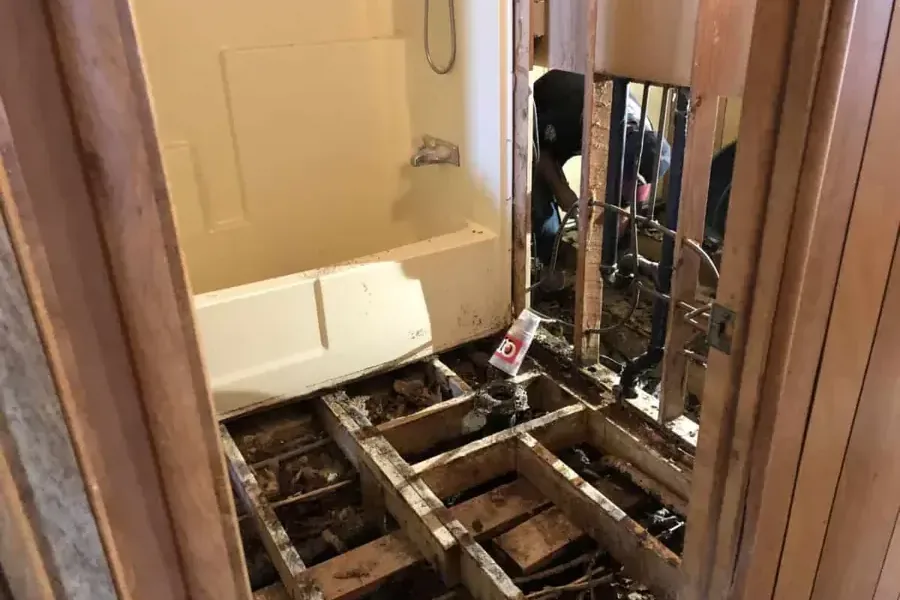
In a manufactured home the floor, walls and ceiling are built from lighter materials, so a leak can reach the structure faster and soften it sooner. Water that sits under a bathroom or kitchen floor can weaken the decking before a stain shows. That is why moisture checks go beyond what can be seen.
Where the water goes
- Floor decking under a leaking toilet or sink
- Wall panels beside a failed supply connection
- Ceilings below a roof opening
- Insulation in the floor and ceiling
- Flooring around a water heater or washer
Leak in a manufactured home? Stop the water if you can and describe the damage to the drying team.
Call about the leak in your homeDrying with care
Soft or swollen decking is cut out and replaced, but sound decking is dried in place with air movers and dehumidifiers. Equipment placement is planned for narrow hallways and smaller rooms, and readings are taken until every layer matches the dry areas. Floor sections that must be opened are cut as small as the damage allows, so repairs stay limited and the patched area can be dried and inspected before it is covered.
Common causes
Roof openings, supply pipe leaks and appliance hoses are the usual sources. A leak from above follows the steps on the roof leak page, and a hose or valve leak is covered on the appliance leak page.
Insurance questions come up on most jobs, so the team keeps photos, readings and a written scope for the insurer.
Manufactured Home Water Damage in short
Manufactured home restoration removes the water, checks floor decking, wall panels and ceilings for moisture, and dries the home with air movers and dehumidifiers so lighter materials are not left damp.