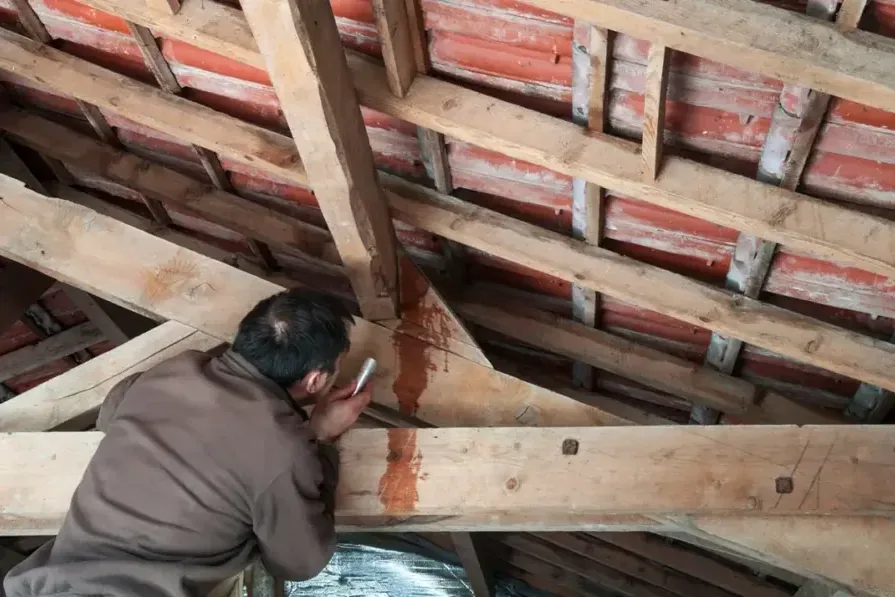
Roof leaks are rarely where the stain shows. Water enters at a damaged spot, runs along the decking and rafters, and drops into the attic insulation before it reaches a ceiling. By the time a ceiling stains, the insulation and drywall above it are usually saturated. Many trees were knocked down in the same 2019 storms, and a fallen limb is one way a roof gets opened.
What a roof leak soaks
- Attic insulation that clumps and holds water
- Roof decking and rafters
- Ceiling drywall below the entry point
- Walls the water runs down
- Flooring beneath the wet ceiling
Rain coming through the roof? Cover what you can and describe the damage to the drying team.
Report the roof waterCovering and drying
The roof opening has to be covered first, usually with a tarp or a temporary repair, or the drying will not last. Then wet insulation is removed, ceilings are opened where they hold water, and dehumidifiers and air movers run until the readings match the dry parts of the home. Photos of the damage taken before and after the covering, along with attic moisture readings, help the insurer follow what happened.
Roof repair is a separate job
A roofer repairs the roof itself, and the restoration team dries what the water reached. Both can happen in parallel, which keeps more of the house from soaking.
The ceiling leak page covers the stained drywall below, and the storm damage page covers wider storm losses.
Roof Leak Water Damage in short
Roof leak restoration removes the water that got in, checks the attic insulation, ceilings and walls for moisture, and dries each wet layer after the roof opening is covered or repaired.