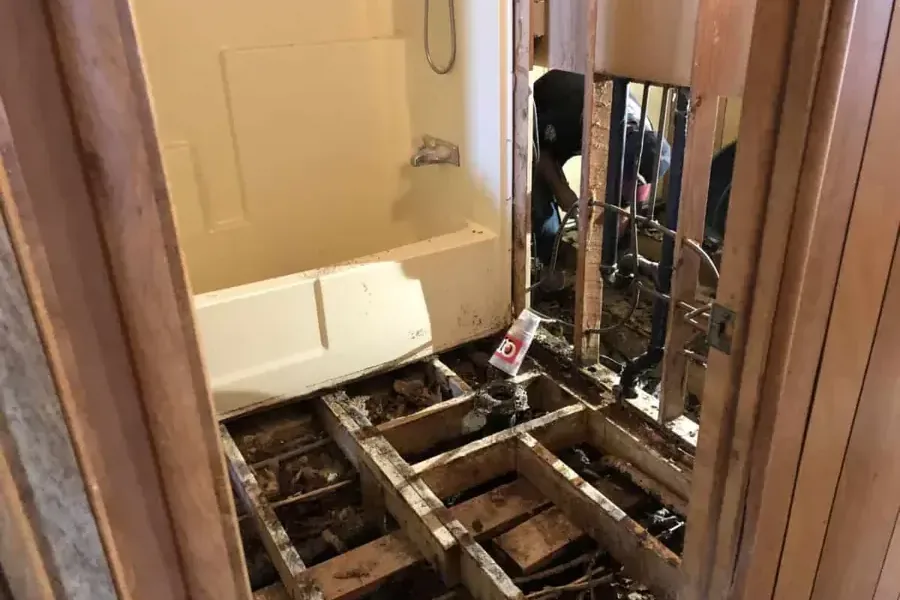
Manufactured homes are built with a lightweight frame and a floor system that can swell once it gets wet. A leak behind a wall or under a sink may reach the decking before any stain shows, and wet insulation under the floor can hold water for a long time. The underfloor area is checked as well.
Where water hides in the structure
- Floor decking that swells near a bathroom or kitchen
- Wall cavities behind thin interior paneling
- Underfloor insulation sagging with water
- Ceiling panels beneath a roof seam
- Cabinet bases above a wet floor
Describe where the water came from and which rooms are wet, and the crew explains how the floor and walls would be dried.
Call about this leakHow the drying is done
Water extraction comes first, then the flooring is lifted and the decking is checked with a meter and a probe. Damaged decking is cut back to solid material, wet insulation under the floor is replaced, and air movers and dehumidifiers dry the cavity so the frame does not stay damp.
Keeping the home dry afterward
Repairs to plumbing, roof seams and window seals prevent a repeat, and each belongs to its own trade. The restoration crew dries the structure, documents the readings and gives the owner the log for the insurance file. For roof sources see roof leak water damage.
Wet floors can start mold growth within 24 to 48 hours, which is why decking is probed even when the surface looks fine.
Manufactured Home Water Damage in short
Water in a manufactured home can reach floor decking, wall framing and underfloor insulation quickly. The crew extracts the water, opens damaged floors where needed and dries each affected room.