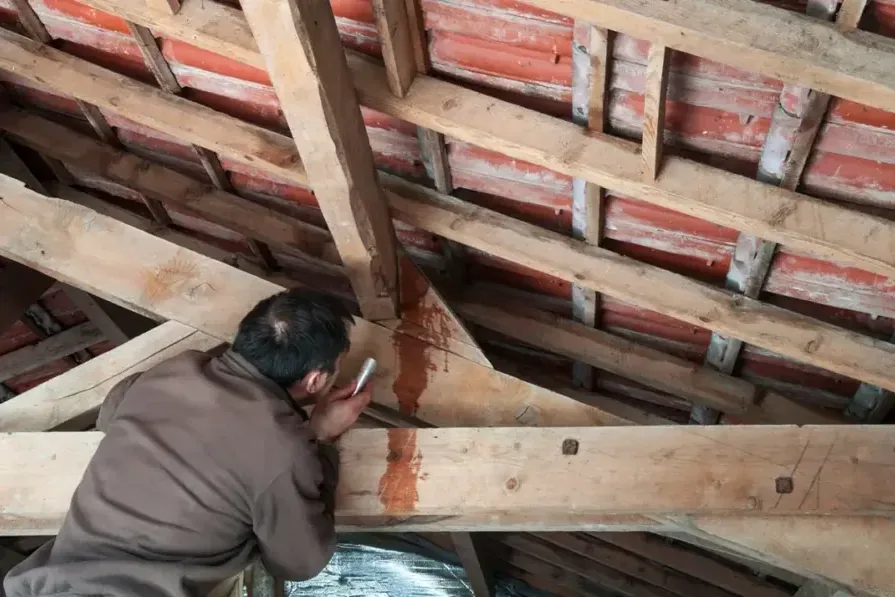
Roof leaks rarely show up where they start. Water enters at a damaged shingle, flashing joint or vent boot, runs along the decking and drops into insulation, so the stain on the ceiling can sit far from the opening. Hurricane Milton brought damaging winds and heavy rain to the area in October 2024.
What the roofer and the restoration team each do
- A roofer repairs shingles, flashing and vents
- Temporary tarping keeps more rain out until then
- Wet attic insulation is removed or dried
- Ceiling and wall cavities below are opened and dried
- Photos of the opening support the insurance claim
Rain is getting in and a ceiling is stained. Describe the roof and rooms below and the cleanup can be explained.
Request roof leak drying helpWhy wet insulation is a problem
Fiberglass and cellulose hold water against the ceiling drywall, so a small roof leak can keep a ceiling wet long after the rain stops. Insulation that stays soaked is removed, and the attic is ventilated and dried so the decking and rafters do not stay damp in a humid climate.
Documenting a storm leak
Roof claims often depend on what caused the opening, so photographs of the damaged area and the wet ceiling should be taken before repairs. Rain through a damaged roof is usually treated differently from rising ground water, and the hurricane and storm water damage service explains the difference.
Once the roof is sealed, the ceiling and walls below are handled under ceiling leak water damage, and any framing that read wet moves into drying until the numbers settle.
Roof Leak Water Damage in short
Water that entered through the roof is traced through the attic, insulation and ceilings, then extracted and dried while temporary protection keeps more rain out.