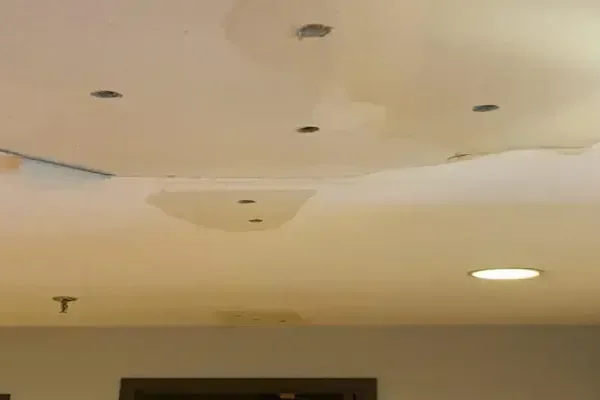
A ceiling stain is a symptom, and the cause is usually somewhere above it. Plumbing in the floor overhead, an air conditioner in the attic or a roof opening can all send water into the cavity, where drywall and insulation hold it until the board sags or the stain spreads.
What a wet ceiling looks like
- A brown or yellow patch that grows after rain or use
- Drywall bulging where water has pooled
- Paint bubbling or peeling near seams
- Drips from light fixtures or vents
- A musty smell in the room below
A ceiling is stained, dripping or sagging. Describe what you see and the plan can be explained.
Request ceiling drying helpHandling trapped water safely
A bulging ceiling can hold a surprising amount of water. A small hole at the lowest point lets it drain into a bucket in a controlled way, which is safer than letting the board fall. Power to nearby fixtures should be off before anyone goes near the wet area.
Opening, drying and tracing the source
The wet section of board is removed, the insulation is checked and either dried or replaced, and the framing above is read with meters. Roof sources are covered under roof leak water damage, and plumbing sources usually begin with a burst pipe assessment.
Whichever way the water arrived, the cavity must read dry before the ceiling is closed and painted.
Ceiling Leak Water Damage in short
Wet ceilings are inspected, opened where drywall sags or insulation is soaked, and dried, while the source above is traced so the same leak does not return.