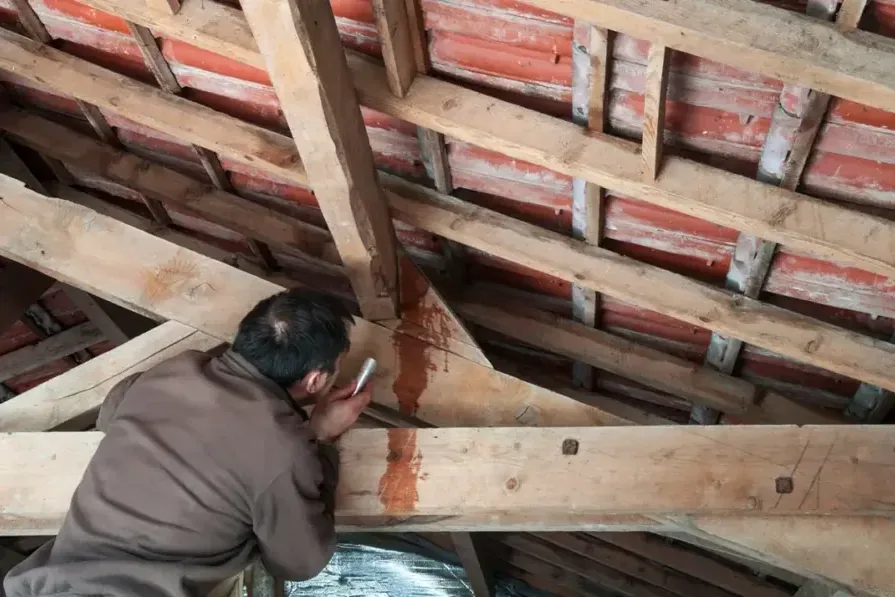
A roof leak rarely stays where it enters. Rain finds a gap in the shingles or flashing, runs along the decking and framing, and shows up as a stain a room or two away from the opening. The drying work happens inside the house, and the roof repair belongs to a roofer.
What dries and what comes out
- Wet ceiling drywall opened and measured
- Soaked attic insulation removed
- Wall cavities below the leak dried
- Flooring under the drip checked
- Trim and baseboards pulled where needed
Rain coming through the ceiling? The crew can dry the rooms below at any hour.
Ask about the storm leakWhy timing matters in the wet season
June through September are the wettest months here, and hurricane season overlaps them. A roof that held through a dry spring can fail when storms stack up, so a stain after heavy rain is worth checking right away. Wind-driven rain can also push water under shingles that normally shed it, and wet insulation is easy to miss from below.
Temporary cover comes first
A tarp or temporary patch keeps more rain out while the roofer works. It is not a repair: it only buys time, and rain can still find a gap at the edges. Once the opening is closed, the crew handles ceiling leak water damage inside and moves to structural drying when walls stay wet.
For wider storm losses, see hurricane and tropical storm water damage or the Zephyrhills water damage page.
Roof Leak Water Damage in short
Water damage mitigation after a roof leak lets rain into the house: interior moisture mapping, wet ceiling and insulation removal, wall drying and readings that confirm the structure is dry.