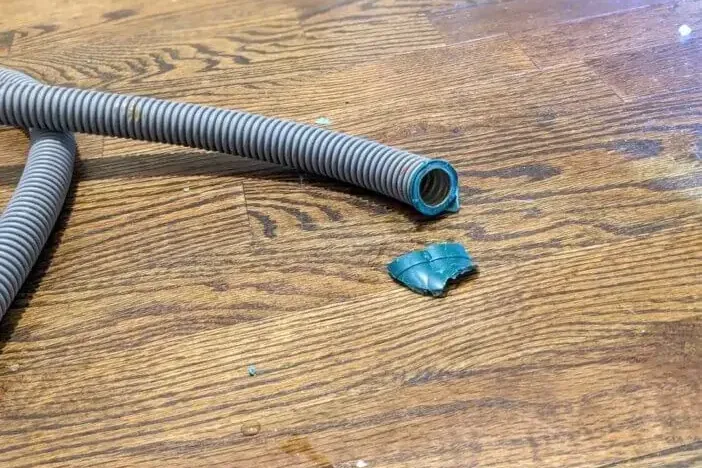
Appliance leaks are quiet. A washer hose, a dishwasher seal or a refrigerator ice maker tube can drip behind a machine for days before a swollen floor gives it away. About 34.0% of the city's 7,587 households were one person living alone in 2020, and a hose that fails while that person is out keeps running until they return.
Where appliance water hides
- Under vinyl, laminate and wood plank flooring
- Inside cabinet bases and toe kicks below the sink and dishwasher
- Behind the machine at the bottom of the wall
- In the subfloor below a laundry room
- Under the refrigerator and its water tube
Water under the washer or dishwasher? The crew can trace and dry it at any hour.
Ask about the leaking applianceHow the spread gets mapped
Moisture meters and a thermal camera follow the water from the machine outward, because it travels under flooring and along the cabinet base long before it appears. The map shows which materials get dried in place and which are removed. Cabinet bases are checked first, because particleboard swells and loses strength once it stays wet.
Fix the source, then dry
Replacing the hose or seal stops the leak. The drying work covers water extraction and the cabinets and floors beside the appliance, and larger spreads move on to structural drying. A leak from a tank is covered on the water heater leak cleanup page.
Replacing old washer hoses and checking the shutoff valves are the simplest prevention. The Zephyrhills water damage page lists the other local services.
Appliance and Supply Hose Leaks in short
Water damage mitigation after a washing machine, dishwasher, refrigerator or ice maker leaks: extraction, cabinet toe kick and flooring checks, wall-bottom drying and moisture mapping to find hidden spread.