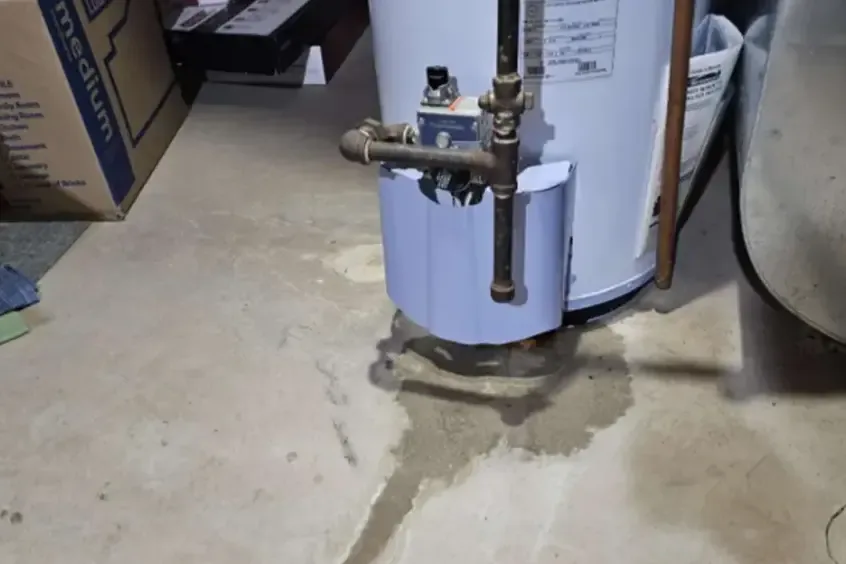
Water heaters tend to fail without warning, and a tank that lets go can put water across a closet floor, into a hallway and under nearby walls before anyone notices. The first job is cutting the water supply and the power to the unit so nothing else is made worse.
Making the area safe first
- Close the cold water valve above the tank
- Cut electrical power at the breaker serving the heater
- Stay out of standing water near wiring and outlets
- Photograph the tank, its label and the wet surfaces
- Move boxes and stored items to a dry surface
A tank is leaking onto the floor. Describe where it sits and the shutoff and drying steps can be talked through.
Ask about the leaking tankWhat gets dried after the leak
A closet or garage floor is simple to extract, but the water often wicks into the bottom of the walls and under flooring in the next room. Technicians take readings past the visible edge of the puddle and dry everything that reads wet, including cabinet bases and baseboards.
Replacing the tank and finishing the job
A plumber replaces or repairs the heater, while the restoration team handles the water already on the floor. Wet drywall low on the walls is cut out when it will not recover, and structural drying finishes the job.
A tank that has failed in a laundry area or a closet can feed water into other rooms too, so the appliance leak water damage service is worth reading when a washer sits nearby.
Water Heater Leak Cleanup in short
Water from a failed or leaking tank is extracted from closets, garage floors and nearby rooms, and the walls and flooring around the heater are dried until readings are normal.