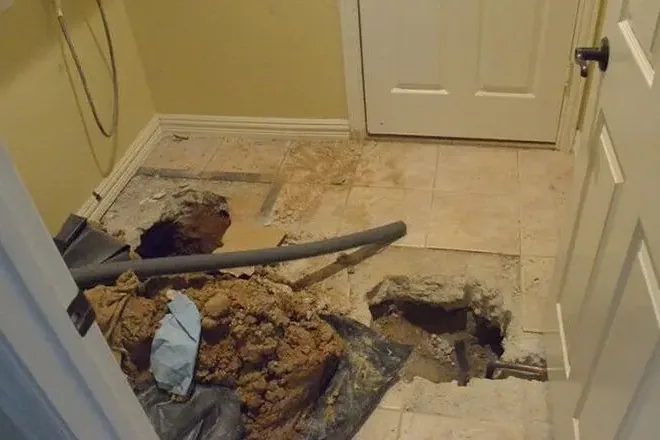
When sewage backs up into a tub, toilet or floor drain, the first question is which system the house is on. The City runs a public sewer, and the City's plan lets existing septic tanks stay in service, so the answer shapes who is contacted and what happens next.
Key takeaways
- Auburndale has a public sewer run by the City's Wastewater Division, and existing septic tanks can stay in service until municipal sewer is available.
- Stop all water use in the house, because every flush or load of laundry can add to the backup.
- Sewage is contaminated, so porous materials it touched are removed and hard surfaces are cleaned and disinfected.
- A plumber finds the clog, a septic contractor handles a tank and the restoration crew handles the cleanup.
- Protective gear, containment and meter-based drying separate a safe cleanup from a risky one.
Which system is the house on?
The City of Auburndale's Wastewater Division runs two plants that treat and reuse water collected through the city's sewage system.
The City's comprehensive plan also lets existing septic tanks stay in service until municipal sewer becomes available, and it prohibits septic systems for new development. So both kinds of homes can exist in the same area.
Knowing the system early also helps when the plumber or septic contractor arrives, because each one starts in a different place.
How to tell which one applies
A few simple clues usually settle it.
- A utility bill with a sewer charge points to the city sewer.
- A tank lid or a drain field in the yard points to septic.
- Property records and the original plans show the system.
- The City can confirm when the answer is still unclear.
Stop using water and keep people out
Every drop sent down a drain can add to a backup. The first step is to stop adding to it.
- Stop flushing and stop running sinks, showers, washers and dishwashers.
- Keep children, pets and anyone with health problems out of the area.
- Do not walk through the water with bare feet or open cuts.
- Close doors to isolate the wet rooms.
- Switch off power to wet outlets, and skip fans and household vacuums.
Protecting the people in the house
Sewage exposes people to bacteria and viruses. Anyone who touched the water washes with soap and clean water, and clothing from the wet area is bagged for laundering.
Children, older adults and anyone with a weak immune system stay out of the area until it is cleaned.
Why sewage is handled differently
Sewage carries bacteria and viruses, so the cleanup is built around protection. Crews wear boots, gloves, suits and respirators, and they contain the area so contamination does not reach clean rooms.
Porous materials that touched sewage cannot be made safe by drying. They are removed.
Contaminated water is graded by how dirty it is, and sewage sits in the most contaminated grade. That grading is why a sewage job is not treated like a leak from a supply pipe.
Containment
Plastic barriers and controlled air flow keep contamination from drifting into clean rooms while the work runs.
Sewer backup or septic backup
The two backups have different causes and different people to fix them.
City sewer backup
A sewer backup may come from a clog in the house drain or from the main in the street. A plumber finds where the clog is, and the City is told if the main may be involved.
- More than one drain backing up at the same time
- Gurgling in a tub or shower when a toilet is flushed
- Water rising in the lowest drain in the house
- A neighbor reporting the same problem
Septic tank backup
A full tank or a failing drain field can push wastewater back into the house. A septic contractor pumps and inspects the tank.
Under the City's plan, replacement septic systems need a City permit in addition to the county permit, and they are not allowed where municipal sewer is available.
What is removed and what is cleaned
The work follows the same rule in every room: if a material absorbed sewage, it goes. If it is solid and can be scrubbed, it stays.
- Carpet, pad and rugs are removed.
- Drywall and insulation that stood in sewage are cut out.
- Particleboard cabinet bases and pressed wood furniture are replaced.
- Tile, concrete and framing are cleaned and disinfected.
- Hard furniture is washed and disinfected where it can be.
Contents and keepsakes
Items that sat in the water are sorted. Hard goods are washed and disinfected, while soft goods such as upholstered furniture and rugs are usually discarded.
Disinfection and drying
After the contaminated water is pulled out, surfaces are cleaned and disinfected. Water extraction handles the bulk of the liquid, and the cleanup then moves to what is left on floors and walls.
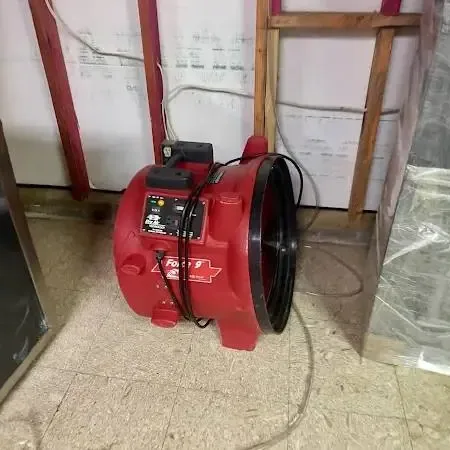
Drying starts only when the surfaces are clean. Dehumidifiers and air movers run until readings on framing and slab match a dry reference.
The sewage backup cleanup page explains the whole sequence.
Odor and air during the work
The smell after a backup comes from materials that stayed wet. Once the contaminated materials are removed and surfaces are disinfected, the odor fades.
Air scrubbers can clean the air while the work runs, and fans are used only after the area is clean.
Who handles each part
A sewage backup involves several trades. Knowing which one handles what avoids wasted effort.
The insurer is told early, and photographs are taken before any item is discarded so the record shows what was lost.
- A plumber finds and clears the clog.
- A septic contractor pumps and inspects a tank.
- The City is told if the street main may be involved.
- The restoration crew handles extraction, cleanup, disinfection and drying.
- The insurer receives photographs and the record of the work.
More on the main service
The main sewage and septic backup cleanup page and the Auburndale page list the steps and the related services.
Questions
How can a homeowner tell whether the house is on sewer or septic?
A sewer charge on the utility bill points to the city sewer, and a tank lid or drain field in the yard points to septic. Property records or the City can confirm it.
Can septic tanks still be used in Auburndale?
Existing septic tanks can stay in service until municipal sewer is available, under the City's plan. New septic systems are prohibited for new development.
Is a replacement septic system allowed anywhere?
Under the City's plan, a replacement system needs a City permit in addition to the county permit, and it is not allowed where municipal sewer is available.
What gets thrown away after a sewage backup?
Carpet, pad, insulation and drywall that absorbed sewage are removed. Solid surfaces are cleaned and disinfected instead.
Can the cleanup wait until the plumber finishes?
The plumber stops the backup, and the cleanup follows. The two jobs are separate, and the water is not left in the house longer than necessary.
Does the City handle a backup inside the house?
The City handles the public sewer. A backup inside the house starts with a plumber who finds the clog, and the City is told if the main may be involved.