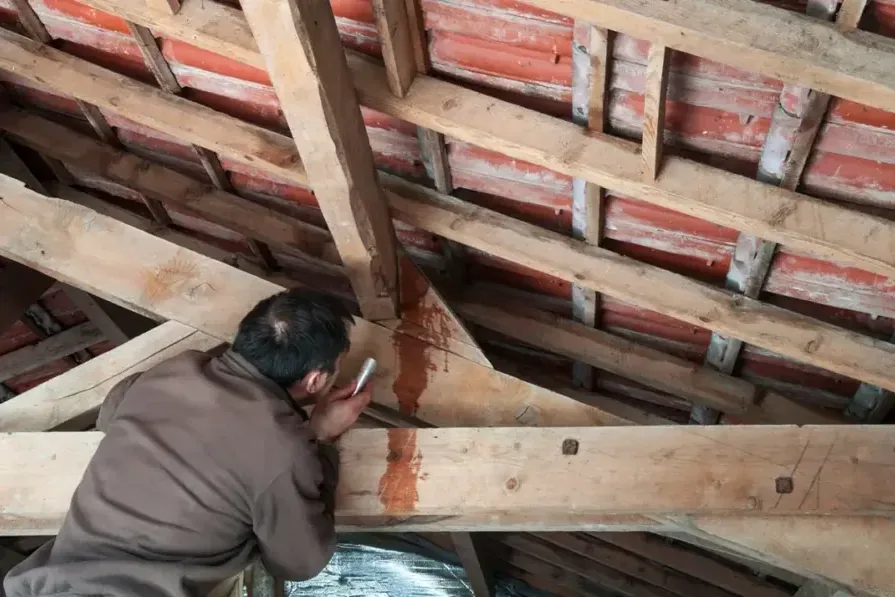
When a storm opens a roof, the rain reaches the attic first and the ceiling second. In the Groveland area, the January 24, 2019 storms showed how fast that can happen, with a roof destroyed and many trees knocked down.
Key takeaways
- A damaged roof lets rain soak attic insulation, and the weight of that water then loads the ceiling drywall below.
- The stain on a ceiling is often far from the roof opening, because water follows rafters and seams.
- A roofer's temporary cover stops new water; until it is on, belongings are moved and drips are caught.
- Wet insulation and sagging drywall are heavy, so they are removed in controlled sections.
- Drying ends when the framing matches a dry reference on the meter, not when it looks dry.
What the January 2019 storms did in the Groveland area
On January 24, 2019, severe storms with a possible tornado crossed Lake County. The most substantial damage was in the Groveland area.
A roof was destroyed and many trees were knocked down. Lake County Emergency Management said multiple structures were damaged and one home was destroyed.
What the report does and does not say
The report called it a possible tornado and did not confirm one. It also does not describe any single street.
It does show what a storm can do to roofs and trees in this part of Lake County, and rain usually follows wind damage.
Trees and roofs together
A fallen limb can open the roof and strip shingles at the same time. The rain that enters through that gap soaks the insulation before any stain appears.
How an opened roof becomes a wet ceiling
Rain enters through the opening and lands on the roof deck, then on the attic insulation. Insulation soaks up water like a sponge and passes the weight to the drywall below.
The stain usually shows away from the opening. Water follows rafters and drywall seams before it finds a low spot.
- A brown ring that grows after each rain
- Paint that bubbles or peels
- A sag between joists
- Drips at a light fixture or vent
- A damp smell in a closet or hallway
Why a stain can show up later
Insulation holds water and releases it slowly, so a ceiling may look fine on the day of the storm and show a stain later. That delay is why a look at the attic after strong wind is useful even when the ceiling looks normal.
While waiting for roof repair
A roofer's temporary cover stops new water. Until it is on, a few steps protect the rooms below.
If water is dripping through a light fixture, the fixture is left off and the circuit is switched off at the breaker until an electrician has checked it.
- Move furniture and belongings away from the wet ceiling.
- Place buckets and plastic sheeting under drips.
- Switch off the circuit for a light fixture or fan under a wet ceiling.
- Photograph the opening, the attic and the ceiling.
- Keep everyone out from under a sagging section.
Leave the roof to a roofer
Climbing on a damaged roof is dangerous. A temporary cover is a job for a roofer, and the roof leak water damage work then deals with what the water did inside.
What happens to attic insulation and ceiling drywall
Wet insulation is heavy and no longer insulates. It also holds water against the drywall, which keeps the ceiling wet long after the rain stops.
Drywall swells, sags and can fall, so a wet ceiling is treated as a hazard. The ceiling leak water damage page explains how the section is opened.
Opening a bulge safely
A bulging section is opened at its lowest point so the water drains into a container. The crew then cuts back to dry drywall.
Insulation removal
Soaked insulation is bagged and replaced. Insulation that stayed dry is kept in place.
Wiring and fixtures
Wires, fixtures and fans in a wet ceiling are switched off at the breaker. An electrician checks them before they are used again, since water and live circuits do not mix.
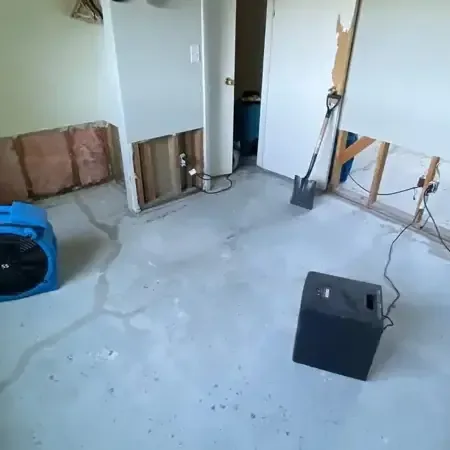
How the rooms are dried
After the wet materials are out, the framing, the room and the contents are dried. Air movers and dehumidifiers run, and meter readings are taken on a schedule.
Structural drying ends when the framing matches a dry reference. A ceiling that looks dry but reads wet is not closed up.
Materials that stay wet can grow mold, which is the reason the readings are followed.
- Joist bays above the stain are opened and dried.
- Wall tops are checked where the ceiling meets the wall.
- Carpet and pad below a drip are dried or replaced.
- Contents are moved out of the wet zone and cleaned.
Contents and furniture
Furniture, boxes and clothing under a wet ceiling are moved to a dry room. Fabric items are dried or cleaned, and cardboard boxes that soaked up water are replaced.
Checks that help before the next storm
Storm damage cannot be prevented, but a few checks make it easier to spot and limit.
- Look for lifted or missing shingles and loose flashing after any strong wind.
- Check the attic for stains, damp insulation or daylight at the roof deck.
- Trim limbs that hang over the roof.
- Clear gutters and downspouts so water leaves the roof edge.
- Keep photographs of the roof and attic in good condition for comparison.
What a before photo does
A set of photographs of the roof, attic and ceilings taken on a dry day gives the insurer a baseline. Comparing it to the storm photographs shows what changed.
When tree limbs overhang
Limbs that overhang the roof can scrape shingles in wind and land on the roof in a storm. Removing them is a job for a tree service, not for a homeowner on a ladder.
Questions for the roofer and the drying crew
A short list keeps the roof repair and the interior work in the right order.
- When will the temporary cover go on?
- Which rooms read wet on the meter?
- Which materials come out, and which stay?
- What does the insurer need in writing?
- How will the roof repair and the ceiling repair be sequenced?
More about the city page
The Groveland page lists every service offered for the city, including drying and storm work.
Questions
Was the January 2019 event a confirmed tornado?
The report called it a possible tornado. It did not confirm one, so it is described only as severe storms with a possible tornado.
Why is the ceiling stain far from the roof damage?
Water follows rafters and drywall seams. It can run a long way before it finds a low spot and shows as a stain.
Should a bulging ceiling be left alone?
No. A bulge holds water and can fall. It is opened in a controlled way so the water drains into a container.
Can wet attic insulation be dried in place?
Usually not. Soaked insulation is heavy and loses its value, so it is removed and replaced.
Who covers the roof opening?
A roofer does. The drying crew handles the water already inside the house.
What if more rain is forecast before the roof is repaired?
A temporary cover is the first priority. Inside, belongings are moved away from the area, drips are caught and the attic is checked for wet insulation as soon as it is safe.