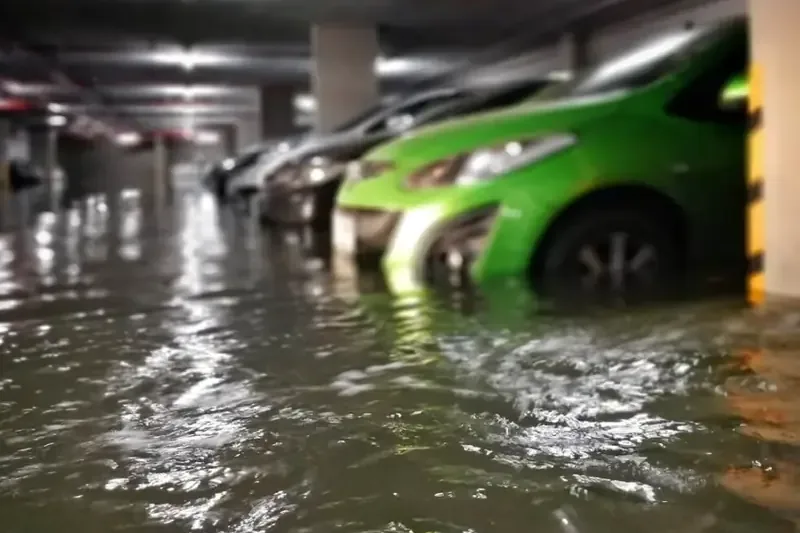
Water that comes into a Bushnell house from outside the walls is not the same as water from a broken pipe. Even when it looks clear, it has crossed yards, roads and drains before it reaches the floor, which is why it is treated as contaminated from the start.
Key takeaways
- Water from outside the house, whether river, creek, runoff or a backed-up drain, is treated as contaminated even when it looks clear.
- Contaminated water soaks into carpet, pad, insulation and drywall, so those porous materials are usually removed rather than dried.
- After Hurricane Milton in October 2024, flooding along the Withlacoochee River was a concern in Sumter County, and the reports do not say Bushnell itself flooded.
- Skin contact, household fans and household vacuums are avoided until the water is extracted by crews in protective gear.
- Hard surfaces and framing are cleaned, disinfected and then dried to meter readings.
What water carries when it comes from outside
Flood water is a mix. As it moves across yards, driveways and roads, it picks up soil, fuel, fertilizer, animal waste and anything else on the ground.
Where drains back up, sewage joins the mix. That is why the cleanup treats the water as the most contaminated category from the first look, not after a test.
Why clear looking water still counts
Color and smell are unreliable clues. Water can look clean and still carry bacteria, so the rule is based on the source rather than the appearance.
Rain that falls straight through a roof is different, and a burst supply pipe is different again. Only water that entered from outside is handled as flood water.
What happened in Sumter County in October 2024
Bushnell is the Sumter County seat, and the land around it is relatively flat, with rivers, creeks and small streams that pass under roads on bridges.
After Hurricane Milton in October 2024, flooding was a concern in Sumter County along the Withlacoochee River. Water continued to be a problem in the Croom area, and officials were watching Lake Panasoffkee and the Outlet River that feeds the Withlacoochee.
The Sumter County Emergency Management Director said the current in the Croom area had picked up, which made it dangerous for everyone, including first responders.
What these reports do not say
They are county level reports. They do not say the city itself flooded, and they do not place the city on the river or the lake.
They do show how quickly moving water can become a safety problem in this part of Sumter County, which is why outside water is handled with care.
What to avoid before the water is out
The aim is to limit contact until crews in protective gear have taken the water out. A few habits cause most of the avoidable harm.
- Walking through standing water with bare skin or open cuts
- Running household fans or a vacuum on wet floors
- Touching electrical panels, outlets or cords that stood in water
- Eating or using food and drinks that touched the water
- Letting children and pets into the wet rooms
Food, toys and everyday items
Anything that touched the water is set aside, including food, drinks, pet bowls and children's toys. Items that cannot be washed and disinfected are replaced.
Medicine and personal care products that sat in the water are checked, and anything uncertain is thrown out.
What is removed instead of dried
Porous materials act like sponges. Once contaminated water is inside them it cannot be washed out, so they are removed and replaced.
A photograph of each item before it goes into the trash supports the insurance record.
- Carpet and carpet pad
- Insulation in walls and floors that stood in water
- Drywall that wicked water above the base
- Particleboard cabinet bases and pressed wood furniture
- Mattresses, upholstered furniture and stuffed items
- Food and anything stored on low shelves
Items worth keeping
Some belongings can be saved with careful cleaning. Solid wood furniture, glass, ceramics and metal items are washed and disinfected.
Photographs and papers that matter are bagged and set aside for a specialist instead of being left to dry on their own.
What is cleaned and dried
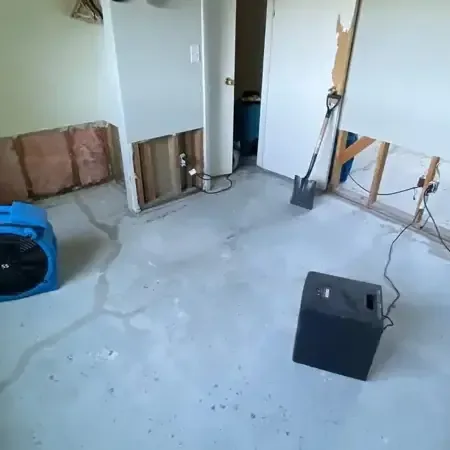
Solid materials survive. A concrete slab, block walls, tile, wood framing and hard furniture are cleaned and disinfected, then dried.
Cleaning comes first
Surfaces are washed to remove soil, then disinfected. Drying equipment does not start on dirty framing, because the moisture would carry contamination deeper.
Drying by meter readings
Dehumidifiers and air movers run until moisture meters show the framing and slab match a dry reference. The flood water cleanup page explains the full sequence from extraction to the final readings.
Why waiting makes it worse
Contaminated water does not improve with time. The longer porous materials stay wet, the deeper the contamination moves into wall bottoms and the slab.
Removal and extraction are not postponed while paperwork is sorted out. Photographs and notes are taken first, and the work then starts.
Extraction comes first, in protective gear
Water is pumped and extracted before anything else, and the crew wears boots, gloves and respiratory protection. Water extraction removes the bulk of the water and lowers the moisture load for every step that follows.
Once the floor is clear, the crew checks how far the water traveled. Water in a house wicks up walls, spreads under floors and moves into cabinets.
- Baseboards and wall bottoms are tested with a meter.
- Floor edges and thresholds are checked for trapped water.
- Cabinet bases and closet floors are opened where readings say.
- The slab is checked for moisture after the surface water is gone.
Keeping a record and staying safe
A clear record helps with the insurer and shows the drying plan was based on measurements. The same record is useful for storm cases covered on the main flood water cleanup service page.
Safety stays ahead of speed, and the work waits until the area is safe to enter.
The landlord or property manager, the insurer and the mortgage servicer are told early, so none of them is surprised by the work.
- Note the date and source of the water.
- Photograph the high water mark on walls and furniture.
- Keep receipts for emergency steps.
- Follow directions from officials on when the area is safe to enter.
Questions
Is all water that gets into a house treated as contaminated?
No. Water from a broken supply pipe or a roof leak is handled differently. Water that enters from outside, such as river, creek or runoff, or from a drain that backs up, is treated as contaminated.
Can carpet be saved after flood water?
Rarely. Carpet and pad that sat in contaminated water are usually removed, because the pad holds water and the fibers hold contamination.
Does the October 2024 flooding mean Bushnell flooded?
No. The reports describe river flooding in Sumter County, the Croom area and a watch on Lake Panasoffkee. They do not say the city itself flooded.
What protective gear does the crew use?
Boots, gloves and respiratory protection are standard for contaminated water, and the work area is contained so it does not spread to clean rooms.
How long does drying take after flood water?
That depends on how deep the water was and how long the materials stayed wet. Meter readings decide when the job is done.