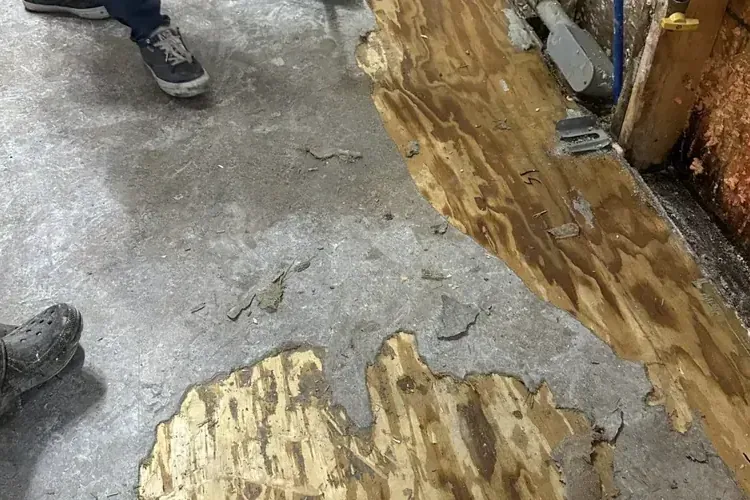
A slab leak is a pressure pipe failing under or inside a concrete floor. The water cannot drain away, so it spreads across the top of the slab and into the flooring, tack strip and wall bottoms before anything shows. A warm patch, damp grout or a climbing water bill is often the first clue.
Signs water is moving under the floor
- A warm spot on tile or bare concrete
- The meter dial turning with every fixture off
- Grout that stays dark in one area
- Cupped wood or loose tiles near one wall
- A hiss or running sound when the house is quiet
Warm tile and a meter that will not stop? The drying team can map the slab 24/7.
Ask about the warm spot on the floorWhy concrete dries slowly in summer humidity
Concrete is a Class 4 material: dense and slow to give up water. With hot, humid air outside, opening windows only adds moisture, so the structural drying team tents the wet section and runs LGR or desiccant dehumidifiers until the slab reads like a dry part of the same floor.
Plumber first, then the drying team
A plumber finds and repairs the pipe, either through the slab or by rerouting it. The drying team handles water extraction and the wet flooring and walls on each side of that repair, and the claim file lists the two jobs separately.
Checking the water meter with every fixture off is the fastest test a homeowner can run while help is on the way. More local detail sits on the Zephyrhills water damage page.
Slab Leak Water Damage in short
Water damage mitigation after a pressure pipe leaks under or inside a concrete floor: slab moisture mapping, selective flooring removal, wall-bottom drying and concrete drying to the IICRC S500 standard.