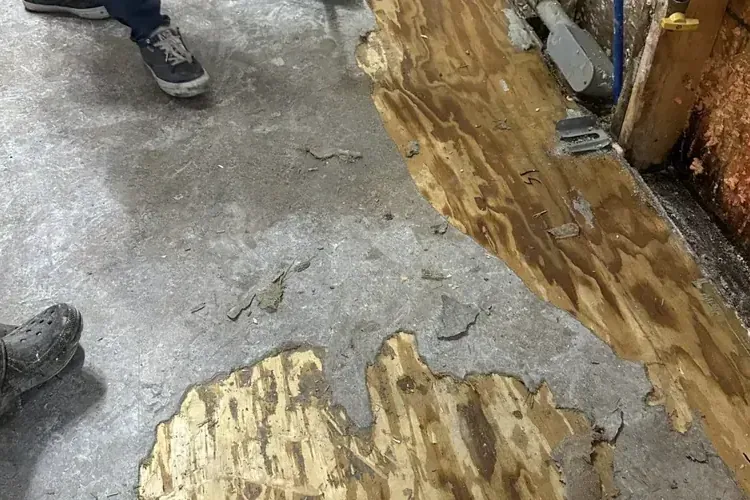
Slab leak cleanup

Slab Leak Water Damage in Auburndale

A leak in or under a concrete slab can soak flooring, baseboards and walls for a long time before a stain or a puddle appears. Meters and thermal imaging trace where it traveled, and drying follows.

(888) 621-2041Ask about a suspected slab leak
Hidden moisture mapping Flooring removal Controlled drying
Flooring pulled up to show water sitting on the concrete slab below
Common signWarm or damp floor
Hidden spotsUnder flooring, inside walls
Useful clueRising water use
CleanupOpen, extract, dry
Typical cost

What does slab leak water damage cost in Auburndale, FL?

A slab leak bill follows how many rooms of flooring come up and how long the water spread unseen. The ranges below separate an early catch in one room from a leak that ran long enough to reach the kitchen and beyond.

One room, caught early
$2,000 to $4,500
  • One room wet
  • Flooring lifted
  • Slab dried
Kitchen and next rooms
$4,500 to $9,000
  • Cabinet bases wet
  • Several floors lifted
  • Longer drying
Long-running leak
$9,000 to $16,000+
  • Walls and floors wet
  • Extensive removal
  • Extended drying

What moves the number: the water category, how many square feet got wet, the material class and how soon drying began.

For a closer planning range, run the water damage cost calculator. These ranges are typical, not a quote.

Do this now

First moves when you find slab leak water damage

  1. Find the wet area

    Meters and thermal imaging show where the water traveled.

  2. Lift affected flooring

    Wet flooring and baseboards come up so the slab and walls can dry.

  3. Dry the slab

    Dehumidifiers and air movers pull moisture from the concrete and nearby walls.

  4. Confirm readings

    The slab and walls are tested again before new flooring goes down.

The process

How slab leak water damage gets handled, step by step

  1. Locate

    Trace moisture with meters and thermal imaging

  2. Open

    Lift flooring and wet baseboards

  3. Dry

    Run dehumidifiers over the slab

  4. Verify

    Test the slab before new flooring

Not every leak announces itself. When a supply pipe fails in or beneath a slab, water can spread under flooring and up into the bottom of walls, and the first clues are often subtle: a damp spot, lifting laminate, a musty smell or a household water use number that keeps climbing.

Clues that point to a slab leak

  • A warm or damp patch on the floor
  • Laminate, tile or wood lifting without a spill
  • Baseboards swelling or drywall staining low on walls
  • A musty smell that returns after cleaning
  • Water use that climbs when nothing in the home has changed

Floors feel damp or the water bill keeps climbing. Describe what you see and the moisture search can begin from there.

Ask about slab moisture

Using the water meter as a clue

The City offers EyeOnWater, which uses automated meter reading so customers can track household water use. A steady climb with no visible cause is worth a plumber's attention, and a plumber, not the restoration team, finds and repairs the pipe. Drying starts once the pipe is stopped.

Drying a wet slab and what sits on it

Concrete holds moisture for a long time, so flooring over a wet slab is lifted and the slab is dried with dehumidifiers and air movers rather than left to evaporate. Structural drying explains the equipment, and readings confirm when the slab is ready for new flooring.

Water from a leak under the slab can also reach walls and cabinets, and any standing water is handled under water extraction before the drying equipment is set.

Slab Leak Water Damage in short

Floors and walls wet by a slab leak are mapped with moisture meters, opened where needed and dried, so the damage is found and handled before it spreads further.

Service area

Slab leak water damage here and in nearby communities

Service area map

Slab leak damage is handled across ZIP 33823, from houses near Kville Avenue and Sun Acres Boulevard to those close to Spring Road, Recker Highway, US 92 and the Polk Parkway, as well as homes within the Arietta Point community.

The same service nearby: slab leak water damage in Dade City, Zephyrhills, Groveland.

Water damage restoration in Auburndale · every town covered

FAQ

Slab Leak Water Damage questions, answered

What are the first signs of a slab leak?

A warm or damp spot on the floor, lifting flooring, swollen baseboards, a musty smell that keeps returning, or water use that rises with no change in the household.

Who repairs the leaking pipe?

A plumber finds and fixes the pipe. The restoration team removes the water already in the home, dries the slab and walls, and documents the damage for the insurance claim.

Can a slab be dried in place?

Usually yes. Concrete is dried with dehumidifiers and air movers, and flooring over it is lifted first. Readings from the slab show when it is dry enough for new flooring.

Does insurance cover slab leak damage?

Coverage depends on the policy and on whether the leak was sudden or ongoing. Photos, moisture logs and the plumber's findings give the adjuster what is needed to decide.

Can the City water meter help spot a leak?

EyeOnWater lets customers track household water use through automated meter reading. A rise with no visible cause is a reason to call a plumber and check floors for moisture.

24/7 emergency dispatch

A hidden leak under an Auburndale floor keeps spreading until it is found

Share where the floor feels damp and what the water use has been doing, and the team will explain how the search and drying work.

(888) 621-2041 · extraction crews 24/7