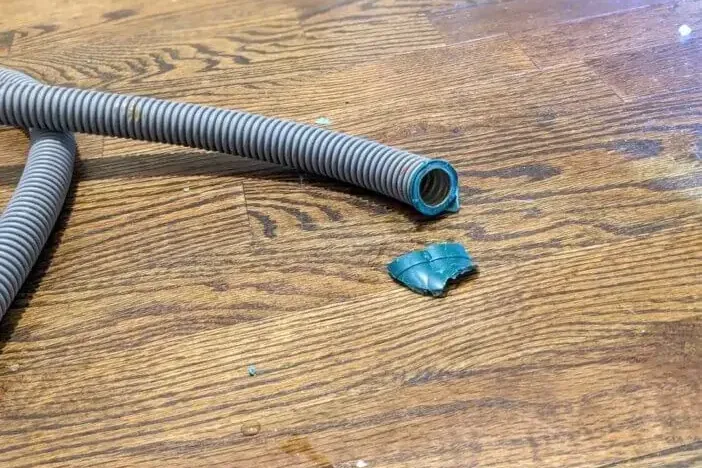
Appliance leaks rarely announce themselves. A hose weeps behind a washer, an ice maker supply tube drips into the cabinet base, or a dishwasher seal fails mid cycle, and the water runs under the flooring where nobody can see it. By the time a floor feels soft, the damage has often traveled well past the machine.
Common sources
- Washing machine supply hoses that bulge or crack
- Dishwasher door seals and drain connections
- Refrigerator ice maker and water dispenser tubes
- Overflowing laundry drain standpipes
- Upstairs units whose leaks reach the ceiling below
Describe which appliance leaked and what the water reached, and the crew explains how the floor and cabinets would be dried.
Report the hose leakHow the water is traced
A moisture meter and a thermal camera follow the leak from the appliance across the floor, into the cabinet base and up the drywall. Flooring that is cupping or delaminating is lifted, and cabinet toe kicks are removed so air can reach the hidden cavity underneath.
Gray water and what it changes
Water from a washer or dishwasher carries soap and food residue, so it is classed as gray water rather than clean. Porous materials that soaked it up, such as carpet pad and particleboard, are normally replaced, while solid wood and tile can be dried and cleaned.
A leak from an upstairs unit also affects the ceiling below, handled under ceiling leak water damage. Appliances that sit on a slab, such as a washer in a garage, leave water on the concrete, which structural drying handles with dehumidifiers instead of heat.
Appliance and Supply Hose Leaks in short
A split hose or failed seal can soak cabinets, flooring and the walls behind an appliance. Moisture mapping shows how far the water spread before extraction and drying begin.