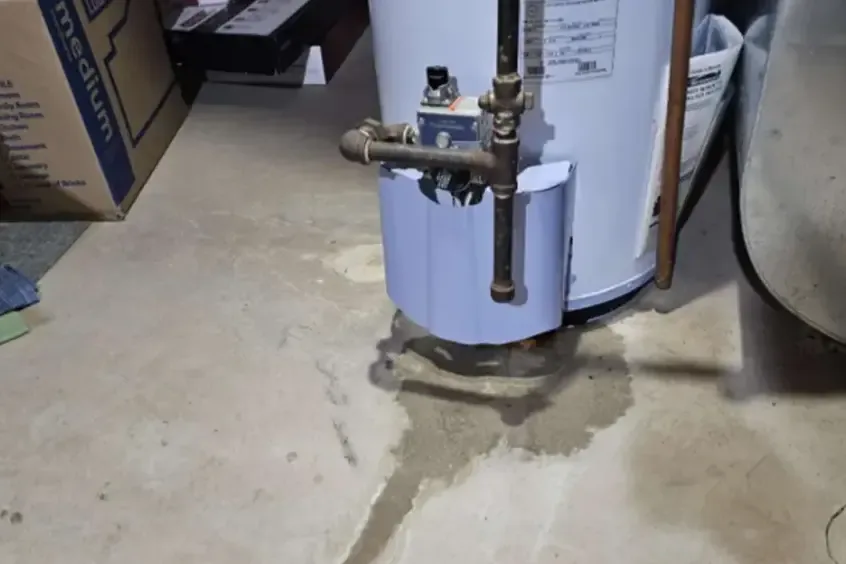
A water heater often fails slowly at first, with a drip at the base or a rusty seam, and then gives way all at once. Because tanks usually sit in closets, garages and utility rooms, the water reaches flooring and drywall before anyone opens the door.
First steps at the tank
- Turn the heater's breaker to off
- Shut the cold inlet valve on top of the tank
- Stay out of pooled water until the power is dead
- Lift boxes and stored gear off the wet floor
- Take pictures of the tank, its data label and the wet floor
Describe where the tank stands and how far the water spread, and the crew explains the extraction and drying steps.
Describe the tank failureDrying around the tank
The crew extracts water from the floor, then checks the base of nearby walls with a meter, since drywall wicks moisture upward from a wet slab or subfloor. Insulation and baseboard that stay wet are removed, and air movers with a dehumidifier finish the job.
After the plumber leaves
A plumber supplies and installs the replacement tank. Drying is timed so the floor is dry before the new unit is set down.
If the leak ran long, nearby rooms need attention too, as covered under water extraction and structural drying.
Water Heater Leak Cleanup in short
Tank failures can release a full tank of water onto closets, laundry rooms and garage floors. The crew extracts the water, checks adjoining walls and dries the area before the heater is replaced.